What Color Should I Use for My Barndo Roof?
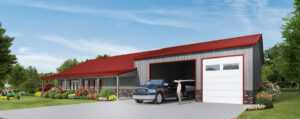
For decades, metal roofing color selection was largely a practical decision. White reflected heat, barn red fit country-style homes and buildings, and galvanized finishes offered economical durability. Today, however, color has become a greater focus in the metal roofing barndominium market.
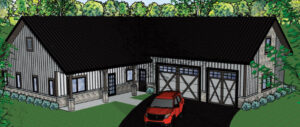
Shield Wall Media, BuildMyBarndo.com’s parent company, did an industry survey and we’ve found that black and charcoal are the dominant roofing colors nationwide. At the same time, there is growing interest in matte finishes, warmer neutrals, wood-look coatings, and subtle accent colors that create a more custom appearance.
We have also spoken to roofing manufacturers to gain their insights.
“We’re continuing to see the dominance of the black/gray/white color palette for roofing,” said Melissa Dunson of Central States. “Consistently over the past three years, Black, Charcoal, Pewter, plus Polar and Brilliant Whites have been our most popular colors.”
Dark Neutrals Dominate
“Neutral colors like Charcoal, Black, White, Gray, and Burnished Slate clearly lead our order data across both 29ga and 26ga panels in all regions,” said Trent Wagler of Graber Post Buildings.
Darker colors continue performing very well with no clear signs that demand has plateaued.
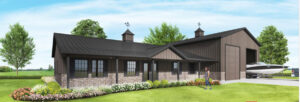
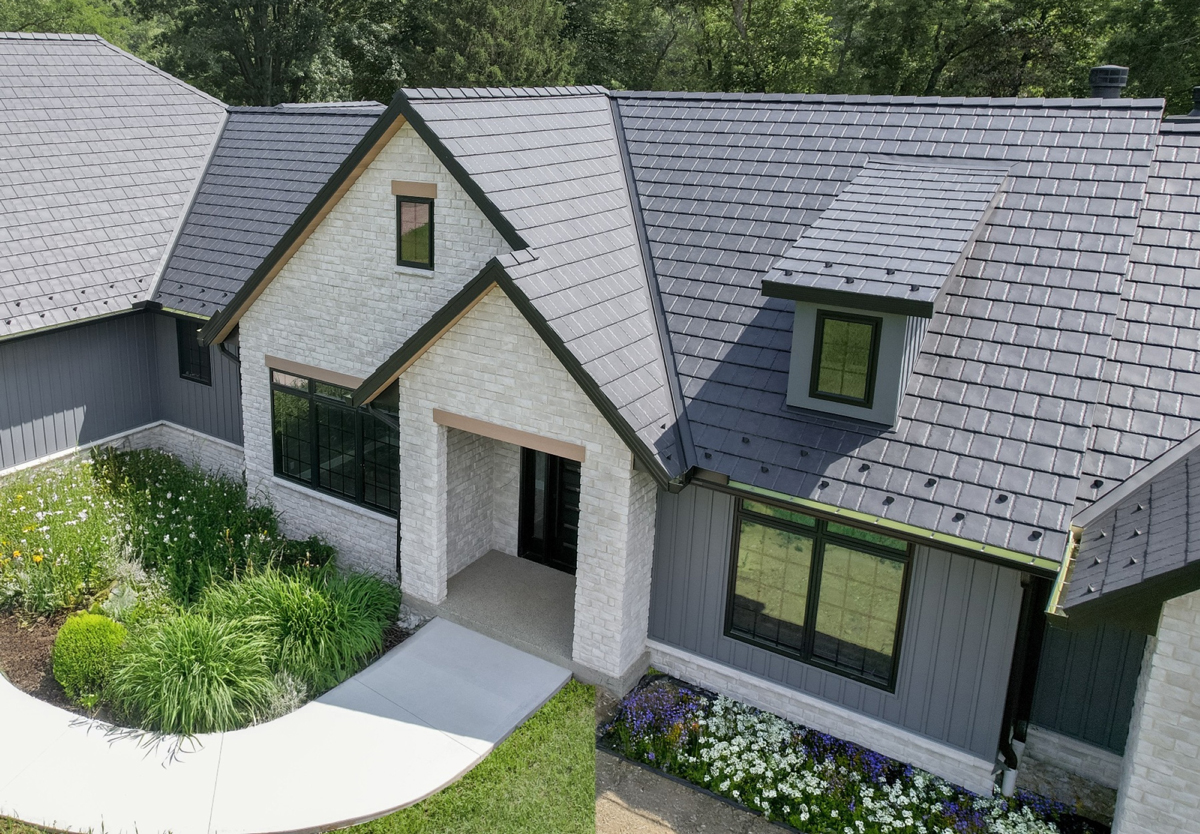
“Matte Black, Charcoal, Burnished Slate, and Dark Bronze continue to drive residential metal roofing aesthetics,” said Scott Steele of Best Buy Metals. “These colors pair well with modern farmhouse styles and contemporary rural homes while still maintaining broad curb appeal.”
At ProVia, Gary Davel said darker colors remain especially popular on the company’s Shake and Slate metal roofing profiles with a matte Kynar 500 paint finish.
Textured and Matte Finishes Gain Momentum
Alongside darker colors, textured and low-gloss finishes continue becoming more important in barndo roofing applications. Homeowners increasingly prefer matte and textured finishes because they:
• Reduce glare
• Create visual depth
• Provide a softer residential appearance
• Help hide dirt and imperfections
“Our Textured (crinkle) line are very popular,” Dunson said. “The textured finish helps reduce glare, masks dirt, and provides a more consistent appearance over time.”
Low-gloss and matte finishes also align closely with the broader architectural movement away from highly reflective agricultural-style appearances toward more refined residential styling.
“Far and away, the most popular colors are black and charcoal, with a distinct preference for the textured options,” said David Martin of HIXWOOD.
“Low-sheen and matte coatings are gaining traction because homeowners want a more residential-friendly appearance with reduced glare and a more upscale look,” Steele said.
Earth Tones Still Hold Strong Positions
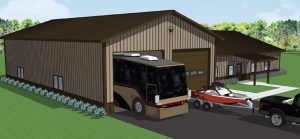
Although dark neutrals dominate much of today’s residential market, earth tones continue performing strongly in rustic residential styles. Brown, bronze, clay, and copper-inspired tones remain especially popular where buildings are designed to blend with natural surroundings. Demand for these colors remains steady.
Steele said “Burnished Slate, Dark Bronze, Copper Penny, and other earth-inspired colors remain important for barndominiums where the goal is often to complement the landscape rather than stand out from it,” Steele said.
Warmer neutrals are also beginning to replace some of the cooler grays and bright whites that dominated earlier design cycles.
“We are seeing many markets move into the warmer neutrals,” said Robyn Ommen of Sherwin Williams. “Many consumers are favoring bronze tones, warmer mid-tone neutrals, and warm off-whites.”
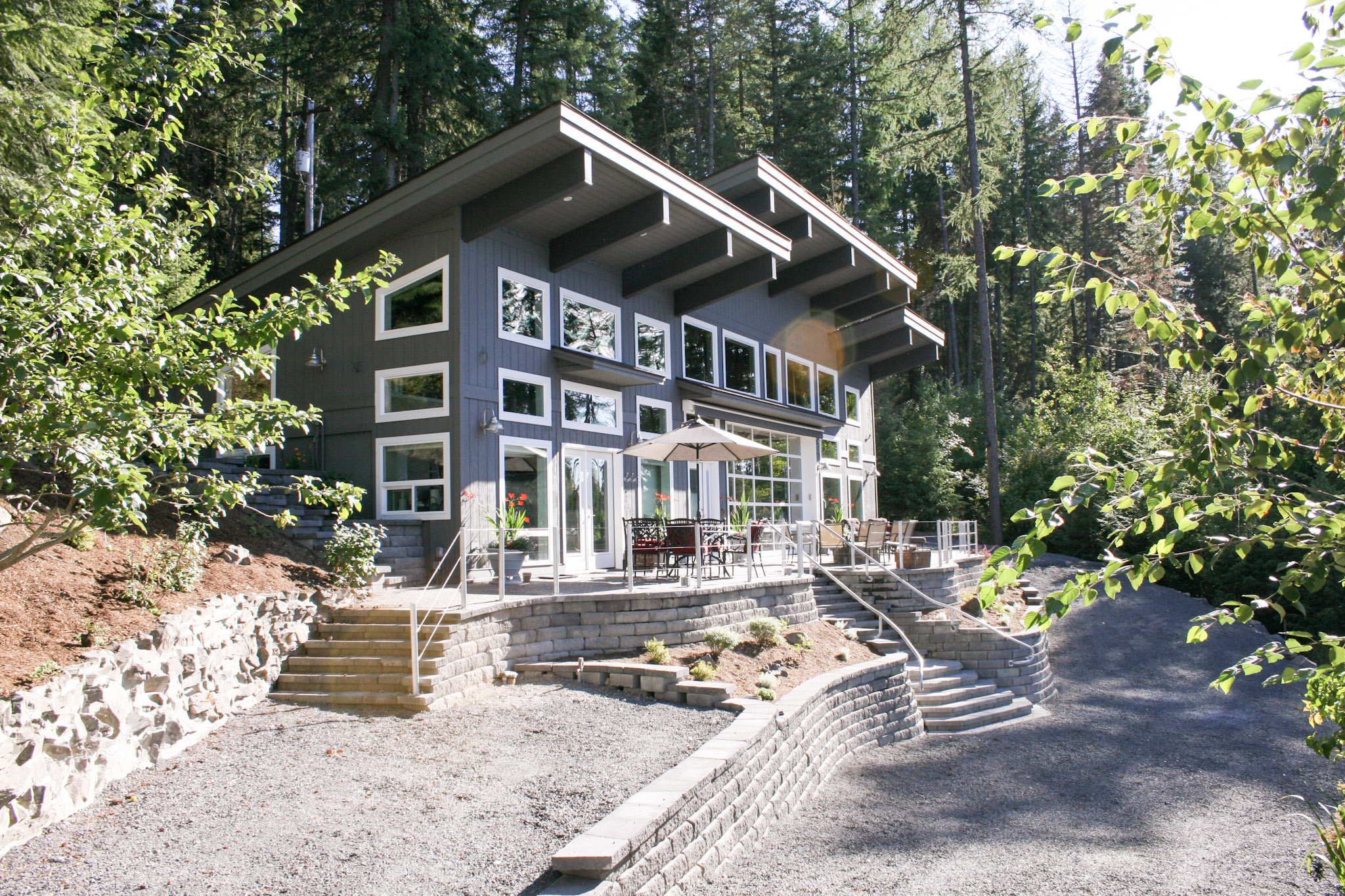
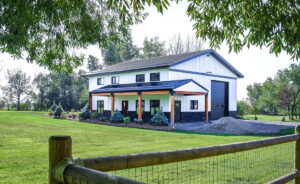
Coalstone Slate metal roofing from ProVia. Photo courtesy of Provia. Image Courtesy of ProVia
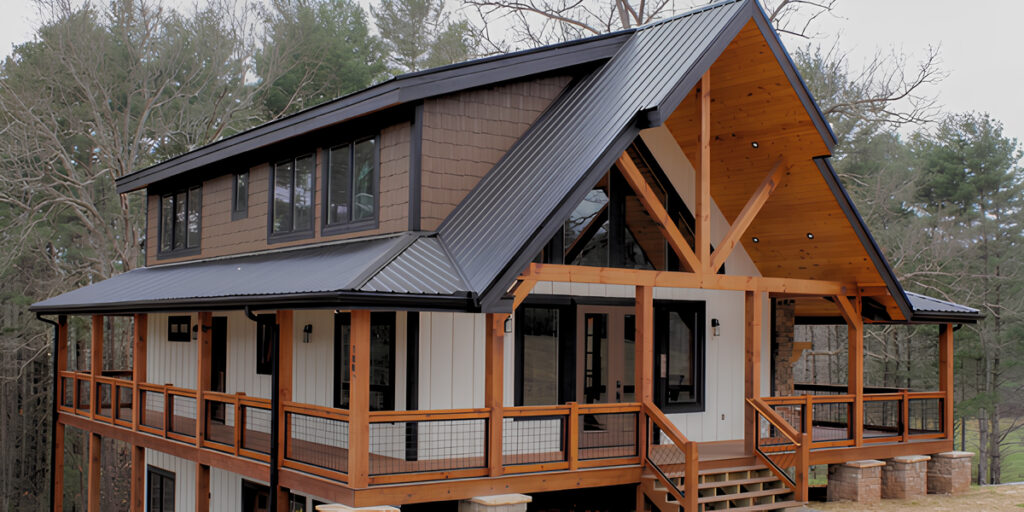
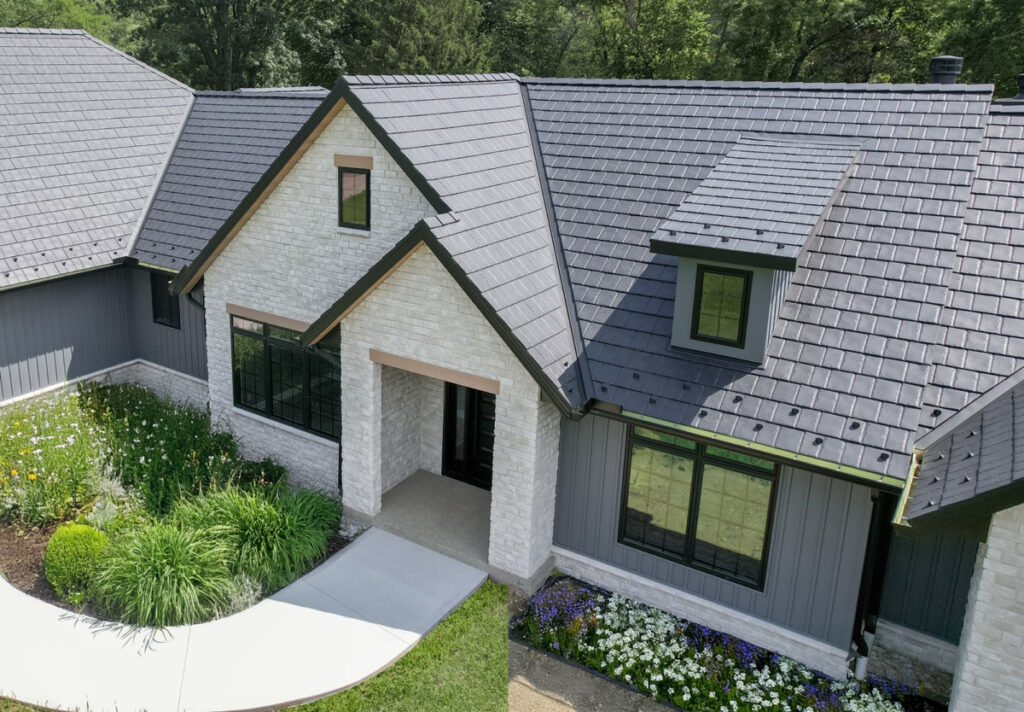
Image courtesy of Best Buy Metal
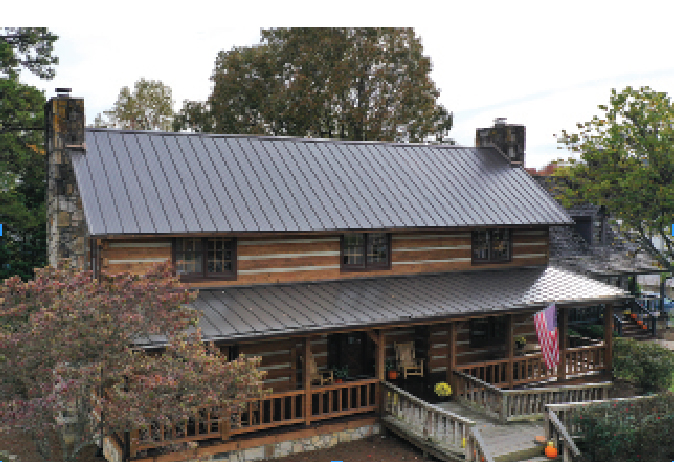
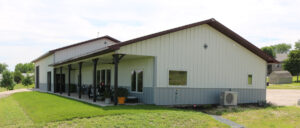
A very popular choice: Burnished Slate. Photo courtesy of Best Buy Metals.
Regional Color Preferences Continue Evolving
Although neutral colors dominate nationally, manufacturers and survey respondents continue reporting noticeable regional differences in how those colors are used and which tones gain the most traction.
The survey data showed black and charcoal performing strongly across nearly every region, but certain markets still maintain distinct preferences shaped by climate, architecture, and local building traditions.
The South and Southwest continue showing stronger demand for lighter colors and reflective roofing systems, particularly in areas with intense sun exposure and higher cooling demands. Whites, light stone colors, and lighter earth tones remain common in those markets, especially on residential buildings where heat management is a priority.
At the same time, manufacturers say darker colors are no longer confined to cooler climates.
“Traditionally, hot, sunny regions have favored lighter roof colors for heat performance, while cooler regions lean darker,” Dunson said. “But in the last several years, the customer desire for darker roofing colors in typically hot climates has increased, regardless of roofing material.”
The Midwest and Northeast report continued strength for darker neutrals overall.
Regional Architecture also Shaping Demand
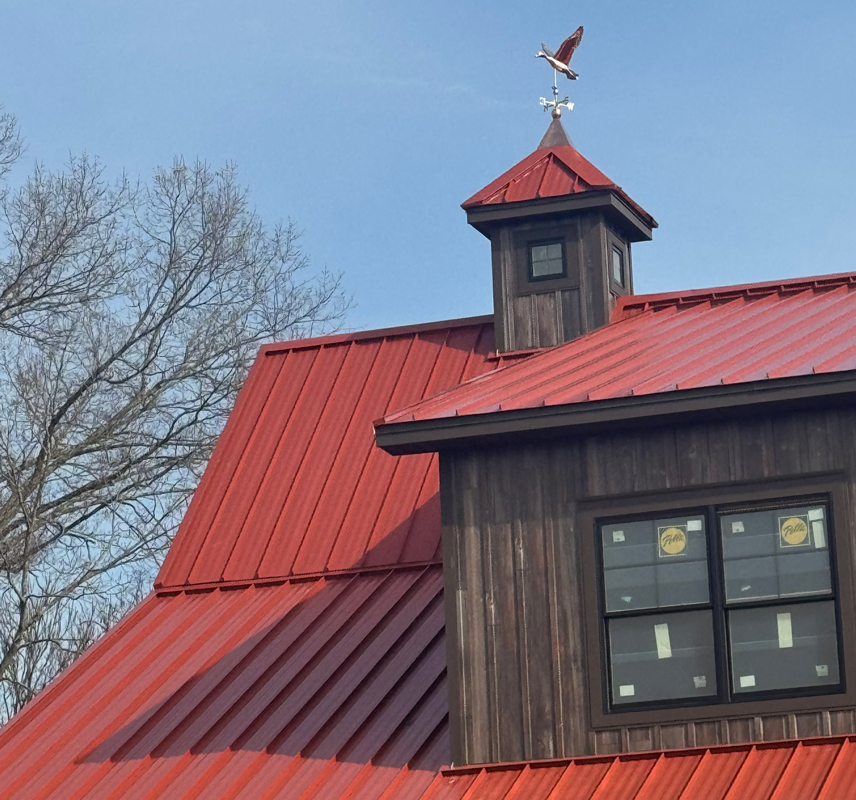
“Farmhouse designs favor warm whites, both glossy and matte blacks, barn reds, and earth tones,” Dunson said. “Modern styles drive demand for blacks, charcoals, and grays. Coastal architecture leans toward lighter neutrals and soft blues to reflect sunlight, while mountain styles prefer deep browns, greens, and muted grays that blend with natural surroundings and landscapes.”
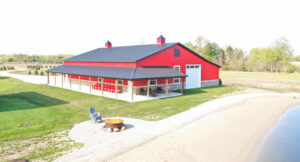
Survey data showed red continuing to perform best in parts of the Northeast, where classic farm-building aesthetics still influence customer expectations. White is in demand in soffit applications in southern and western regions, where brighter finishes remain associated with traditional rural construction.
There is subtle regional growth in darker accent colors, particularly deep greens and navy tones. Those colors remain niche compared to black and charcoal, but suppliers say they are gaining traction in mountain regions, upscale markets, and parts of the Northwest where homeowners often prefer colors that complement wooded surroundings and natural landscapes.
“We have started to see a lot of interest in very dark navy and green colors,” Ommen said. “Nearly black, but with some chroma to add some additional interest.”
At the same time, warmer neutrals appear to be replacing some cooler gray palettes that dominated earlier design cycles. Warm earth-inspired colors perform well in rural residential construction and barndominiums throughout the Midwest and Plains states, where builders often want structures to blend into agricultural or wooded settings rather than create stark visual contrast.
Survey results suggest that customers are arriving at contractor meetings with stronger pre-formed color preferences than in years past. That trend appeared especially strong in residential standing seam markets in the South-Midwest and Northeast, where homeowners are increasingly influenced by online imagery, architectural trends, and social-media design inspiration.
Accent Colors Slowly Expanding
Several manufacturers noted growing interest in subtle accent colors that still fit within the broader neutral palette. Dark greens and deep navy tones appear to be gaining the most traction.
Homeowners look to muted greens, sage tones, and wood-look finishes as they strive for individuality without abandoning resale-friendly palettes.
At True Metal Supply, Shannon Clark said the company continues seeing increased interest in specialty colors and finishes alongside traditional neutrals.
“We are seeing a rise in specialty requests for Colony Green, Silver Sage, and innovative materials like digital, wood-printed steel,” Clark said.
Climate Still Matters — But Less Than Before
Traditionally, lighter roofing colors dominated southern climates because of solar reflectivity concerns. While that influence still exists, aesthetics increasingly outweigh climate considerations for many homeowners.
That shift has benefited metal roofing because reflective paint systems and metal’s inherent reflective qualities help reduce some of the heat-gain concerns associated with dark roofing.
Survey respondents reported growing awareness of cool-roof concepts in southern and high-solar-exposure markets. However, aesthetics and architectural style still appear to drive most color-selection decisions.
Standing Seam’s Influence on Color Trends
Many of today’s color trends are closely tied to the continued growth of standing seam and concealed-fastener roofing.
“Exposed-fastener remains dominant, but concealed-fastener/standing seam demand is increasing, especially in residential and premium applications,” said Bonnie Beck and Frank Miklos of Everlast Roofing.
Standing seam buyers tend to favor:
• Darker colors
• Textured finishes
• Matte coatings
• More curated architectural palettes
Homeowners increasingly associate standing seam systems with long-term value, premium aesthetics, and reduced maintenance requirements.
Shad Eash of Red Dot Products said, “More homeowners view metal as a long-term investment and want cleaner aesthetics.”
Balancing Trends with Long-Term Value
While bold darker colors are very stylish, regionally traditional choices may be better long-term.
“While grays, whites, and earth tones consistently deliver strong curb appeal and resale value,” Dunson said. “Bold or highly specific colors are best used as accents.”
Wagler said, “Most roof projects still rely on standard colors, as they offer better availability, faster turnaround, and more cost efficiency.”
One thing appears clear in metal roofing trends: color is no longer an afterthought. It has become one of the defining decisions shaping the overall appearance of the barndo.
Resources
• Best Buy Metal • www.bestbuymetals.com/
• Central States • https://centralstatesco.com/
• Everlast Roofing • https://everlastroofing.com/
• Graber Post • https://www.graberpost.com/
• Hixwood • https://hixwood.com/
• ProVia • https://www.provia.com/
• Red Dot Products • https://www.reddotproducts.com/
• Sherwin Williams • https://industrial.sherwin-
williams.com/na/us/en/coil-extrusion.html
• True Metal Supply • https://www.truemetalsupply.com/