
A barndominium roof can shed an impressive amount of water. Instead of sending all of that rainfall through the downspouts and across the yard, a rainwater harvesting system can save some of it for the next dry stretch.
The simplest system may provide water for flower beds and a modest garden. With a larger system, the same basic idea can supply toilets and a washing machine, and maybe even showers. Systems become more complicated as the water moves closer to people. Rainwater intended for flowers does not require the same safeguards as water sprayed over a person or pet. That is why it helps to think of rainwater harvesting in stages.
How Much Water Can Your Roof Collect?
“One inch of rainfall on a 2,000-square-foot roof represents approximately 1,246 gallons of potential collection,” said Dan Flarida, marketing manager, RainHarvest Systems. That surprises many homeowners, but it also explains why a broad barndominium roof can be one of the property’s most useful water assets.
The actual amount reaching the tank will be somewhat lower. Water is lost when it wets the roof, remains in gutters, splashes out or is intentionally diverted to carry away the dirtiest initial runoff.
Even after accounting for these losses, a barndominium’s large roof can be an excellent rainwater collector. The challenge is usually not capturing water; it is storing enough water to last between rainfalls without installing a tank that is needlessly large and expensive.
The basic collection estimate is:
Roof collection area × rainfall in inches × 0.623 = potential gallons collected
Use the horizontal footprint of the roof for this equation.
A rainwater-system professional can refine the number using local rainfall history, roof characteristics, household demand and expected system losses.
The Simplest System: Water for the Garden
A basic garden-watering system does not need to be elaborate. At its simplest, it includes the roof, gutters, a downspout, a debris screen, a rain barrel or small tank, and a hose or spigot.
Rain falls on the roof and flows into the gutters. The downspout carries it toward the barrel, where a screened inlet keeps out leaves and larger debris. Water is accessed through a spigot near the bottom. An overflow outlet directs excess water away from the foundation once the barrel is full.
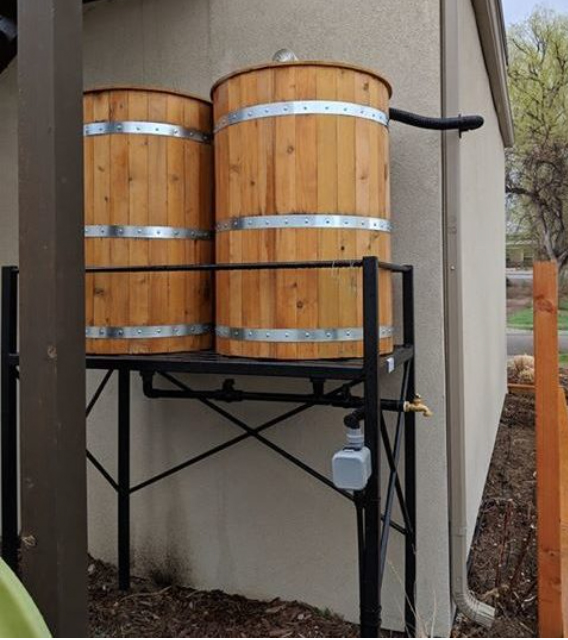
A tightly fitted lid and screened openings are important. They help keep out mosquitoes, rodents, leaves, and other contaminants. The barrel should sit on a solid, level base that can support its full weight. Water weighs approximately 8.3 pounds per gallon, so a full 55-gallon barrel weighs more than 450 pounds before the weight of the container is included.
Elevating the barrel slightly can create enough gravity pressure to fill a watering can or feed a short hose. It will not produce the pressure most people expect from a conventional garden hose. A small transfer pump can be added if the water must travel farther or operate a low-pressure irrigation system.
One rain barrel will not carry a large garden through a long drought. The University of Minnesota Extension estimates that a 100-square-foot garden needs about 62 gallons to receive the equivalent of one inch of rain. A 600-square-foot garden would require approximately 372 gallons. A barrel is therefore best suited to flower beds, containers, young trees, or supplemental garden watering. Several connected barrels or a tank holding a few hundred gallons will be more useful for a sizable vegetable garden.
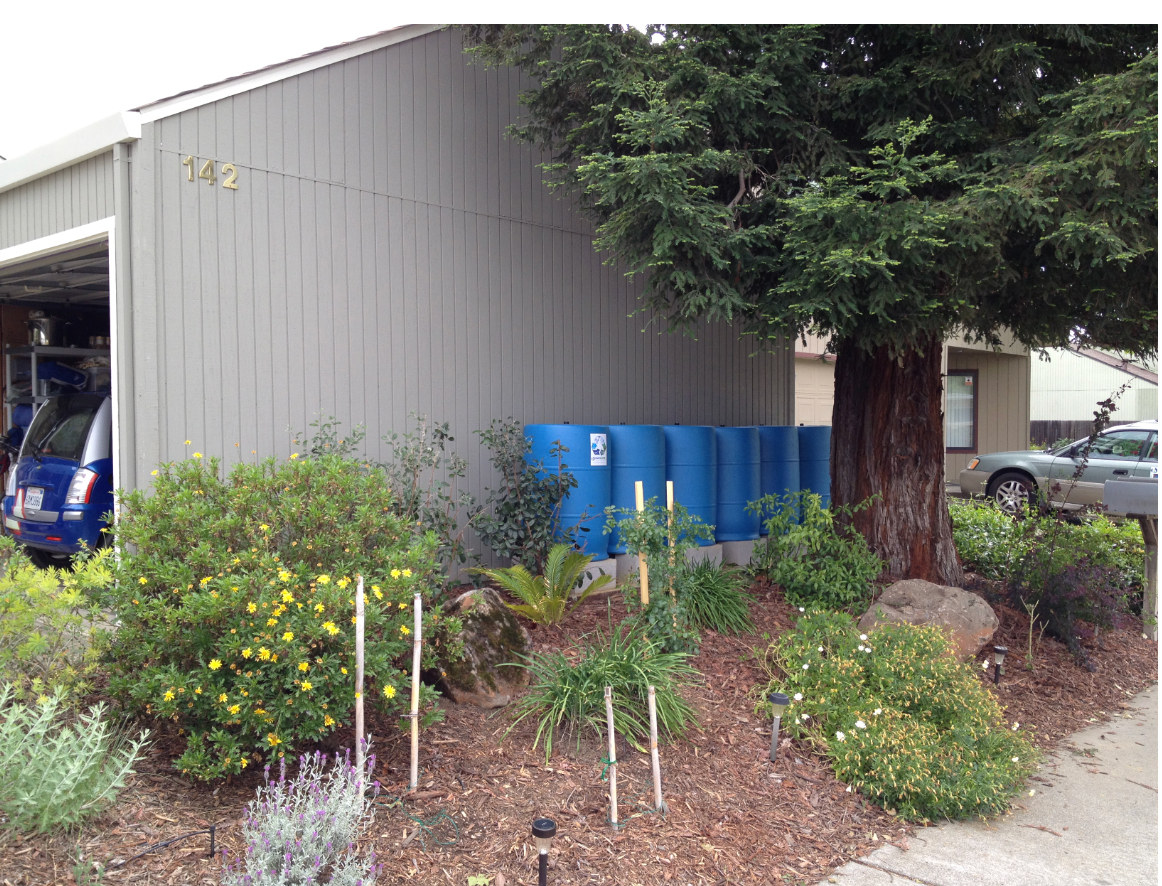
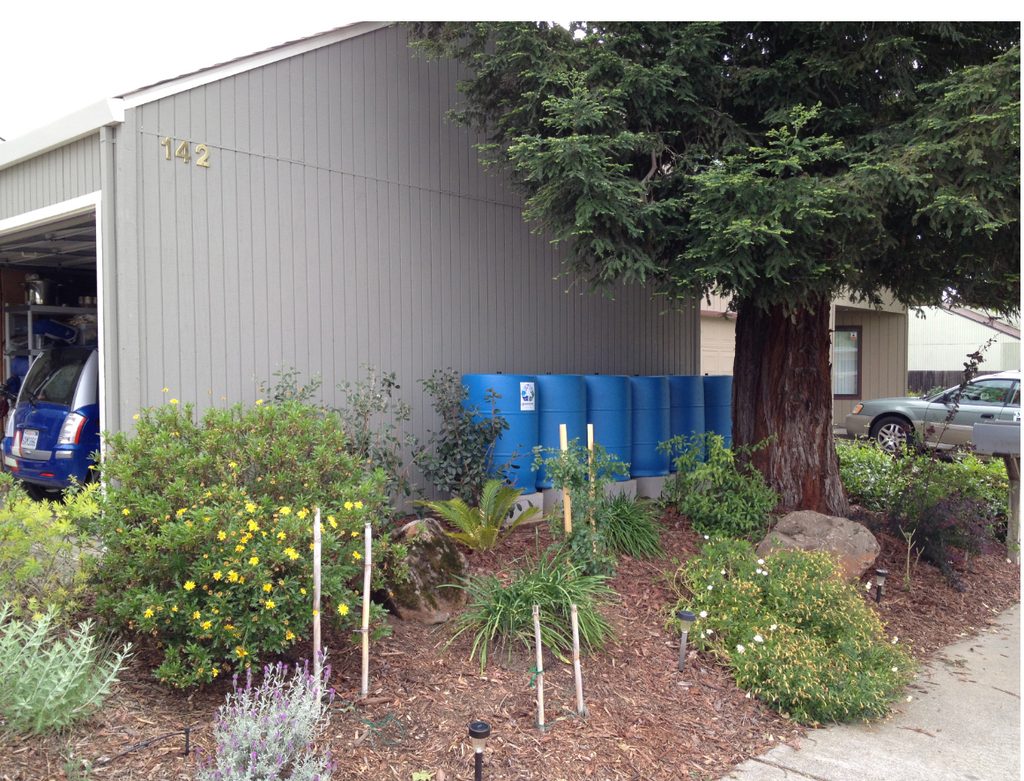
Connected barrels can also solve a problem that comes with one large tank: finding a place where it fits. A modular rainwater system divides storage among several smaller containers that fill and drain together. BlueBarrel Rainwater Catchment Systems, for example, connect repurposed 55-gallon food-grade barrels from underneath. The group functions as one tank with one downspout connection and one irrigation hookup.
“A BlueBarrel System can begin with as few as two barrels, providing 110 gallons of storage, and expand over time using our Add-On Kit,” according to Jesse Savou, founder and owner of BlueBarrel Rainwater Catchment Systems. Because the barrels can be arranged to suit the available space, the system can be expanded or reconfigured rather than replaced as watering needs grow. BlueBarrel says some customers have built systems that hold thousands of gallons by adding barrels over time.
The company’s bottom-draining design makes the stored water available through the shared plumbing and is particularly well suited to gravity-fed drip irrigation. The same water can also be used for washing tools, vehicles, and other outdoor, nonpotable jobs. This type of system is not a potable-water system; moving the water indoors requires equipment and safeguards beyond those included in a garden-oriented barrel kit.
Drip lines and soaker hoses generally make better use of the stored water than overhead sprinklers, and it is always advised that water be applied to the soil around the plants. The roof and gutters should also be kept free of animal waste, decaying debris, and other questionable materials.
People have been using simple barrel systems for their gardens for thousands of years. With a few simple precautions, such as using screens and covers to keep out bugs and animals, periodic cleaning of water containers, and keeping the roof and gutters free of debris, you can enjoy lower utility bills while stopping rainwater from eroding landscaping and avoid overtaxing community water systems or reserves while watering your garden.
Improving the Garden System
A more dependable outdoor system normally includes gutter guards or leaf screens and a larger opaque storage tank. An opaque tank limits sunlight, which helps discourage algae. The tank also needs a screened vent, an accessible inspection opening, a drain for cleaning, and an overflow pipe large enough to handle incoming water during a heavy storm. The overflow should discharge where it will not erode soil, saturate the foundation, or overload a septic drain field.
Rutgers university extension provides precautions for safely using harvested rainwater for edible plants. Use a first-water diverter which discards the first water off the roof, water edible plants close to the ground as roots naturally screen out most contaminants but edible portions do not have such protection, and treating the water monthly with an ounce of unscented bleach per 55 gallons of water, then allowing the treated water to sit for 24 hours before use.
Cold-climate owners also need a winter plan. Aboveground barrels, exposed piping and pumps can freeze and crack. The outdoor system may need to be drained and disconnected before winter. A system intended to operate year-round requires protected piping and tank, pump, and treatment equipment located below the frost line or within conditioned space.
For a homeowner comfortable with basic tools, a modular system can be an approachable DIY project. BlueBarrel custom-packs its DIY RainKit for the customer’s chosen capacity and arrangement. The kit includes specialized components, illustrated instructions, a maintenance and operations manual, and installation videos. RainHarvest Systems takes another approach, offering individual components, preconfigured RainFlo systems with many fittings already installed on the tank, standard PDF and CAD drawings, and design help for more complex projects.
Taking Rainwater Indoors for Toilet Flushing
Toilet flushing is a logical next step because it uses a significant amount of household water. However, bringing rainwater indoors changes the project from a simple landscaping feature into a plumbing system.
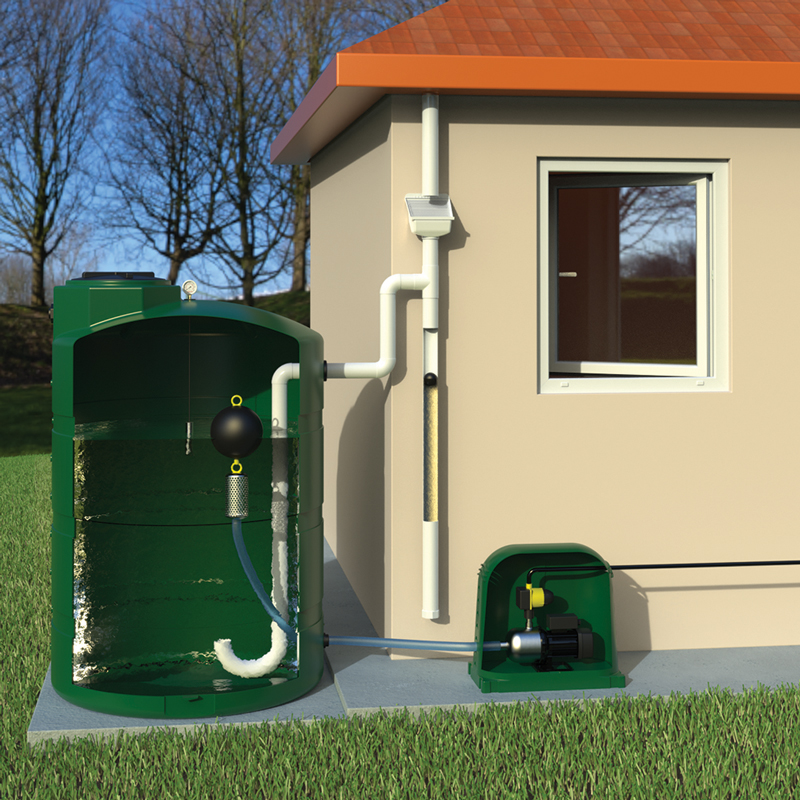
The system still begins with the roof, gutters, screens, and tank. then adds a first-flush diverter to temporarily redirect the beginning of each rainfall as the first runoff may carry dust, pollen, and other material that accumulated on the roof between storms. After the diverter fills or completes its cycle, cleaner runoff flows into the main tank. The system then adds finer filtration, a pump, a pressure tank or pump controller, dedicated nonpotable plumbing, and appropriate backflow protection.
The pump supplies water at the pressure required by the toilets. A pressure tank or variable-speed controller keeps the pump from turning on and off every time a toilet is flushed. Filters protect the pump and toilet valves from grit and sediment.
The rainwater piping must remain separate from the home’s drinking-water plumbing. It should be clearly identified as nonpotable, and precautions must prevent rainwater from flowing backward into a well or public water supply. If the system automatically switches to well or municipal water when the tank is empty, the backup connection must use an approved separation or backflow-protection arrangement. This is work for a qualified plumber who understands the applicable local code.
The amount of storage needed will depend on the number of residents, their habits and the toilets themselves. Older toilets may use several gallons per flush, while WaterSense-labeled toilets (an EPA label that denotes water efficiency) use no more than 1.28 gallons. A household with efficient fixtures will stretch its stored supply much further.
The likely result is a system that can cover much or perhaps all toilet-flushing demand during rainy periods. During a long dry spell, the system will need a backup water source, or the household will need to return temporarily to its regular supply.
Adding the Washing Machine
Laundry increases both water demand and the need for reliable water quality. ENERGY STAR reports that a certified full-size clothes washer uses approximately 14 gallons per load, compared with about 20 gallons for a standard machine. Six loads per week could therefore add roughly 84 gallons to the weekly demand of an efficient washer.
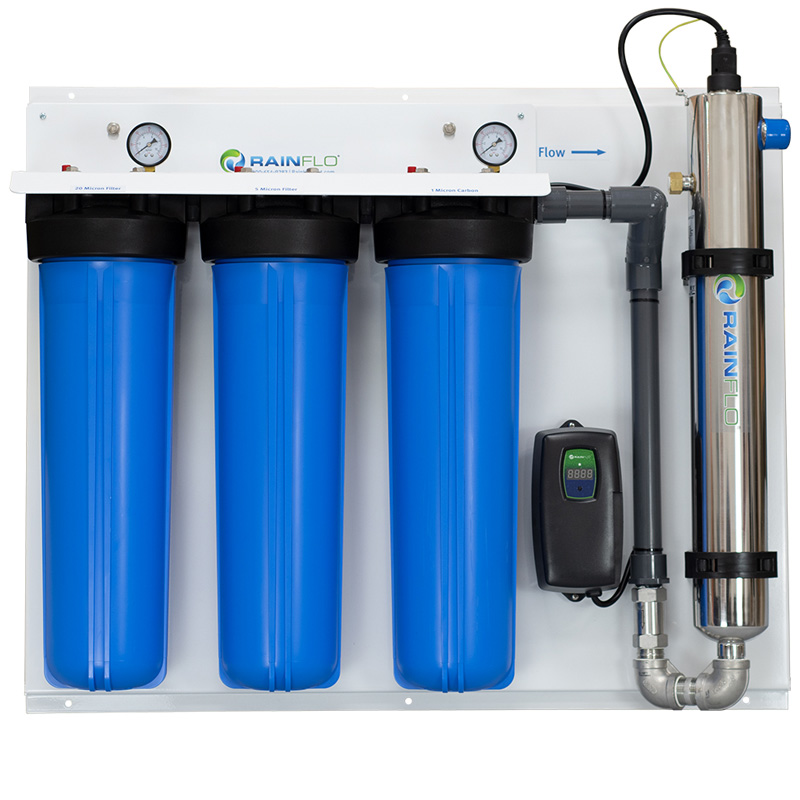
Water for laundry should be filtered well enough that sediment, discoloration and organic matter do not reach the machine or stain clothing. Depending on the roof, local air quality, and stored-water quality the treatment train may include sediment filtration, finer cartridge filtration, activated carbon, and disinfection.
Rainwater is naturally low in minerals, which can be helpful for washing because less detergent may be needed. However, “soft” does not necessarily mean clean. Rainwater can collect microorganisms, soot, pollen, chemicals, and animal waste as it moves across the roof. Stored water can also deteriorate if the tank admits light, insects, or debris.
A laundry-capable system should include an accessible sampling point so the water can be tested. Filters and treatment equipment must be selected for the contaminants actually present rather than simply installing a generic filter and assuming it makes the water suitable.
With the right treatment, controls, and plumbing, a moderate system can supply the garden, toilets, and washing machine. This is often a practical stopping point for homeowners who want to reduce conventional water use without treating harvested rainwater for bathing or drinking.
It does not have to be an all-or-nothing decision. Flarida recommends beginning with two questions: “How much rainwater can I realistically collect, and how much water do I want to use?” Local rainfall patterns, storage space, anticipated demand, budget, and local requirements help define the sensible stopping point. A homeowner may begin with irrigation, then add a pump, filtration, disinfection, and dedicated indoor plumbing later.
A Larger System for a Large Barndominium
A large barndominium may offer a tremendous collection area, but it may also have greater demand. Multiple bathrooms, frequent laundry, extensive landscaping, and a dog-washing station can use water quickly. If showers are included, daily demand rises substantially.
The collection side of the system will look familiar: a suitable roof, appropriately sized gutters and downspouts, debris screens and first-flush diversion. However, several downspouts may feed a common conveyance line leading to one large cistern or a group of interconnected tanks.
The tank may hold several thousand gallons and can be installed aboveground, partially buried, or underground, depending on the climate, soil, available space, and local requirements. Underground tanks must be designed for burial and for the loads imposed by the surrounding soil, groundwater, and any vehicles that may pass nearby. An ordinary aboveground poly tank should never be buried unless the manufacturer specifically permits it.
A large system should also include a calming inlet that reduces disturbance of sediment at the bottom of the tank, a floating intake that draws water from below the surface rather than from the bottom, a screened overflow, and a way to inspect and clean the tank. Level sensors can show how much water remains and inform the control system when backup water is needed.
The pump and pressure equipment must be sized for simultaneous demand. A small pump that can supply one toilet may not keep up when a shower, washing machine, and dog tub are operating at the same time. A designer should calculate both total daily use and peak flow.
Making Rainwater Suitable for Showers and the Dog Tub
Once rainwater is used for showering, the standard changes considerably. Shower water contacts the eyes, mouth and broken skin and can be inhaled as droplets. Dogs may drink from the tub or lick water from their coats. For those reasons, shower and dog-tub water should be treated as water requiring a high level of protection, even if the kitchen sink and drinking-water fixtures remain on a well or public supply.
A typical treatment train may include prefiltration before the tank, sediment filtration after the tank, finer filtration, activated carbon and disinfection using ultraviolet light, chlorine or another approved method. The correct arrangement depends on the source-water quality, local requirements and the treatment manufacturer’s specifications. Ultraviolet equipment, for example, is most effective when water has already been filtered so suspended particles cannot shelter microorganisms from the light.
The system may also need treatment for chemicals. A filter that removes sediment will not necessarily remove dissolved metals, pesticides or other chemical contaminants. The Centers for Disease Control and Prevention advise testing the water and choosing treatment based on the particular germs or chemicals present in the water.
A professionally designed system should include scheduled testing and an easy method of taking samples. It may also have pressure gauges, filter-change indicators, ultraviolet intensity monitoring, automatic shutoff and alarms that prevent untreated water from reaching the showers when part of the treatment system fails.
For many homes, the simplest arrangement is to keep drinking, cooking, tooth-brushing and dishwashing water on the conventional potable supply. Harvested water can then serve the garden, toilets and laundry, with separately treated water serving showers and the dog tub if local authorities approve it. Other homeowners may pursue a fully potable rainwater system, but that requires an even higher standard of treatment, testing, permitting and ongoing management.
Will the Roof Supply Enough?
A 4,000-square-foot roof can theoretically collect about 2,480 gallons from one inch of rain. That sounds like an enormous supply until household demand is considered.
Four people taking eight-minute showers with 2-gallon-per-minute WaterSense showerheads would use 64 gallons per day. Add toilets, laundry, dog washing and irrigation, and the stored supply can decline quickly. Irrigation often creates the greatest seasonal demand because the garden needs the most water when rainfall is least dependable.
For this reason, tank sizing should not be based only on the amount produced by a single storm. It should consider monthly rainfall patterns, expected dry periods, usable roof area, available tank space and each planned use. A system may collect thousands of gallons over a year yet still run short during a three-week drought.
It is also sensible to prioritize uses. During a dry period, the controls might reserve water for toilets and laundry while suspending landscape irrigation. A gauge or app-connected level monitor can help owners adjust before the tank is empty.
Plan the System Before Building
Rainwater collection is easiest to incorporate while a barndominium is being designed. The plan can route downspouts toward the tank, leave room for filters and pumps, install dedicated piping and provide access for tank cleaning and equipment replacement. It is much harder to find space for a large cistern or run separate plumbing after the walls and landscaping are finished.
Before buying equipment, speak with the local building or plumbing department. Rainwater rules vary substantially among states and municipalities. When a small-scale rain barrel system is used for gardening purposes, it usually requires no certification. However, some states have caps on the amount of water that can be stored. Some may require additional treatment, labeling, inspections, or professional design. Indoor rainwater systems may also need permits and approval from a plumbing inspector or health department.
Rainwater harvesting is not entirely maintenance-free. Screens and gutters need cleaning. The first-flush device must drain and reset properly. Tanks require inspection, and pumps, filters and disinfection equipment need scheduled service. Water used for bathing should be tested at intervals recommended by the system designer or local health authority.
The best maintenance strategy begins before the water reaches the tank. “The most important principle is to keep debris out of the storage tank in the first place,” according to Flarida. Good prefiltration reduces the work required of pumps, filters, and treatment equipment downstream. Depending on the system, routine care may also include inspecting a floating intake, cleaning or replacing filter cartridges, and replacing a UV lamp according to the manufacturer’s schedule.
Modular barrel systems require many of the same basic checks. Closed-top, UV-resistant barrels help limit debris and algae. Savou says there are features that can help keep maintenance manageable, for example automatic overflow handling, bottom-draining arrangement, and prefiltration.
Regardless of brand or tank type, owners should follow the manufacturer’s maintenance instructions and inspect all connections, screens, overflows, and supports periodically.
Resources
BlueBarrel Rainwater Catchment Systems. https://www.bluebarrelsystems.com/
RainHarvest Systems https://www.rainharvest.com/shop/
American Rainwater Catchment Systems Association. Rainwater Harvesting Education and Professional Resources.
ASSE International. Rainwater Catchment Professional Certification and Directory
Centers for Disease Control and Prevention. Collecting Rainwater and Your Health: An Overview,
About Choosing Home Water Filters.
ENERGY STAR. Clothes Washers.
National Science Foundation. Certified Products and Systems.
Penn State Extension. Rain Barrels Turn Rainwater into a Backyard Resource.
Rain Brothers. Cisterns, Tanks, Pumps and Rainwater Filtration.
Rainwater Equipment. Complete Rainwater Harvesting Packages.
Rainwater Management Solutions. Residential Rainwater Consulting, Equipment and System Design.
Rutgers New Jersey Experiment Station. Rain Barrels Part IV: Testing and Applying Harvested Water to Irrigate a Vegetable Garden.
U.S. Department of Energy, Federal Energy Management Program. Rainwater Harvesting Systems Technology Review.
U.S. Environmental Protection Agency. Residential Toilets, Showerheads, State and International Summaries of Rainwater Reuse Guidelines and Regulations.
University of Minnesota Extension. Watering the Vegetable Garden.