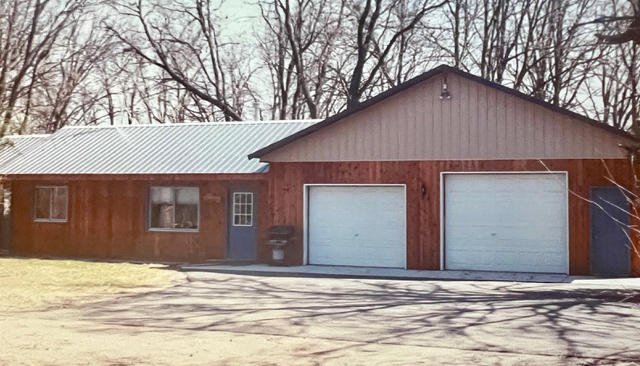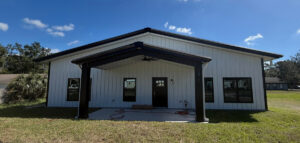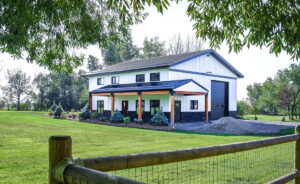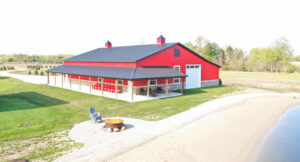
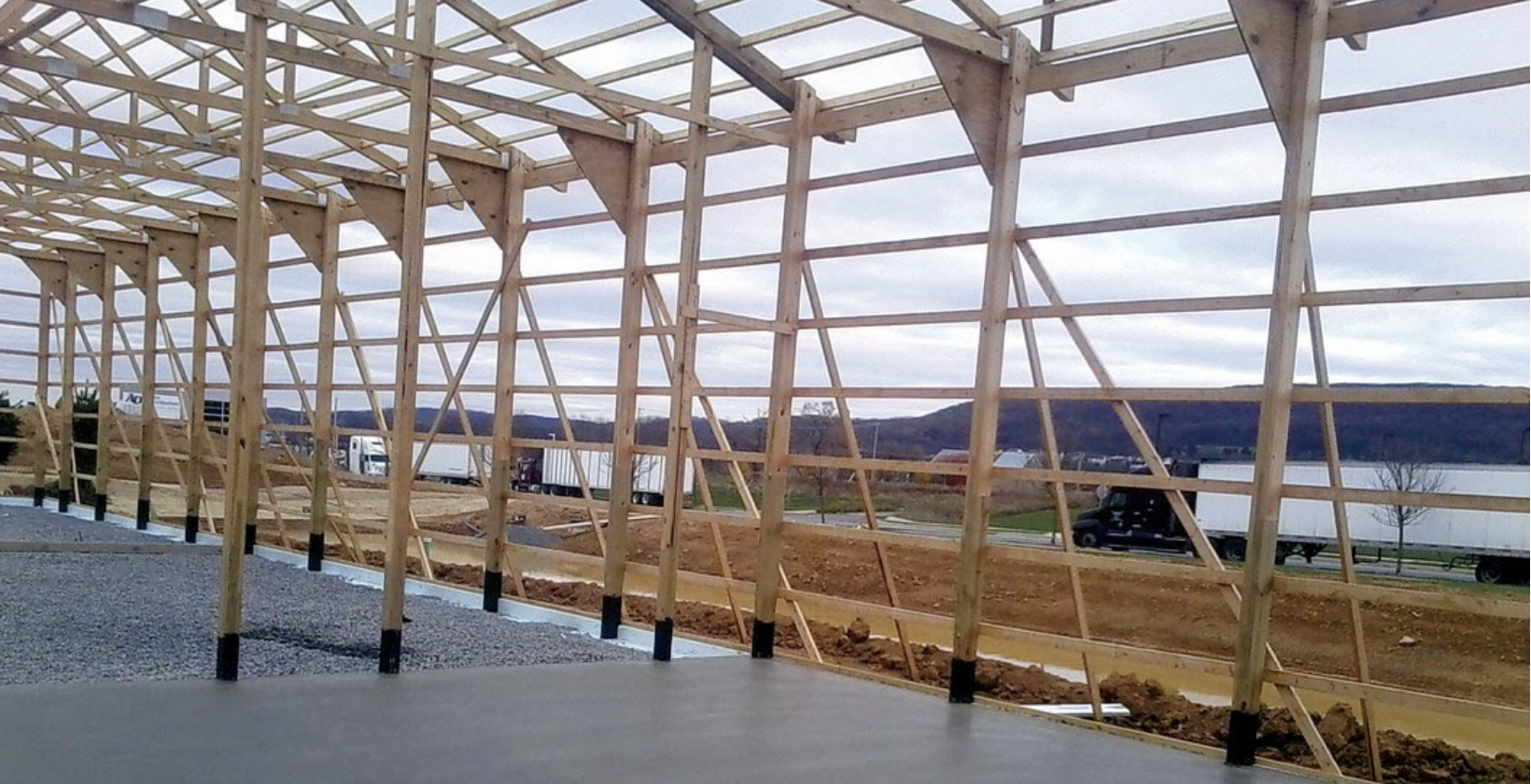
Wood support columns like those used in post-frame construction should never go into the ground untreated or uncovered, and that is especially true when the columns are supporting a home. Wood rots when it gets wet, and unfortunately, modern technology has not solved that problem. While you might assume we’d be getting better at creating long-lasting poles using modern techniques, in reality, poles coming out of the factories today are very often lower quality than what was produced 10 years ago. Here’s what you need to know and what to do about it.
Untreated Wood Posts
“The challenge with non-treated posts in the ground is finding naturally durable species,” said Barry Hoffman, president at Planet Saver Industries / GreenPost. “In most areas of North America, we have seen non-treated posts in-ground lasting eight years and less.”
No matter how dry the ground may appear to be, it is rarely 100% dry. Even the driest earth will eventually accumulate moisture, and this moisture will transfer to wooden posts. Biological decomposition results causing post rot that can destroy a structure. It is a silent destroyer, working below ground slowly to rot posts, and you may not even know you have post rot until it is too late.
Untreated and uncovered wood posts set directly into surrounding soil are likely to begin rotting as soon as their base absorbs some water. Even treated posts have their limits. “No matter what chemical protection is used, it doesn’t last forever,” said Ken McDonnell, president, Post Protector Inc. He said that even if that pressure-treated pole has chemical protection, “every year that passes, the chemical protection is depleting.” And nature takes over from there. “That’s why fungi are on the face of the Earth; the Good Lord put them here to recycle the nutrients and dead plants,” he said.
Proper Pressure & Chemical Treatment
Wood columns that are destined for the ground get both chemically treated and pressure treated, but not all treated lumber is created equally. There are different types of treatments for different applications.
There are certain wood posts certifications to watch for. The AWPA Use Category system provides a simple way to select preserved wood products by relating the end use of wood product directly to the appropriate AWPA Standard. Use Categories define a series of different exposures for preserved wood products that may be used in construction. The AWPA Use Category for vertical posts for frame building is: UC4B: Ground Contact, Heavy Duty Wood used in contact with the ground either in severe environments, such as horticultural sites, in climates with a high potential for deterioration or in critically important components. Hoffman said most regions will dictate what type of treatment is allowed and required to be used depending on what the post is being used for.
“When we talk about structural posts in the ground, they require a higher level of treatment than your standard miscellaneous piece of lumber that’s above ground,” said Adam Kraus, structural engineer at Wick Buildings. “There are differences in treatment levels and types for different applications. Wick follows all American Wood Protection Association (AWPA) procedures for the appropriate type and dosage of treatments for our posts for in-ground.”
Wooden posts come from the factory pressure-treated with a copper preservative called ACQ, a type of water-based wood preservative product that is applied at timber treatment plants by industrial vacuum-pressure impregnation. As a copper carrier, ammonia can penetrate difficult-to-treat wood better than other waterborne preservatives.
All of the experts interviewed said that treatment is inconsistent, though. “I’ve seen posts that haven’t stood the test of time,” said Dave Gruhlke, president of Plasti-Sleeve, Zimmerman, Minnesota. “There are always inconsistencies in treatment.”
“When a treated post has maximum chemical protection only then does it get the tag on the bottom saying suitable for ground contact,” McDonnell said. “Because ground contact decay hazards are severe, that’s why you need maximum chemical absorption and retention for ground contact. If you have 24 posts on your jobsite, no two of them have the exact same decay-resistance index. There are multiple variables such as wood density and how it accepts the penetrating process — the process that forces the pesticide into the wood. No two pieces of wood are going to have identical absorption and retention characteristics.”
Inconsistency in Post Production
How can you ensure your wood posts are good for in-ground use? This is a very important question because Mark Stover, president at Perma-Column said, “the lumber industry today is producing hybrid trees and they’re not the same as those people now call “old-growth trees.”
“Wood quality and strength overall have been declining because of hybrids,” Stover said. “Hybrids are designed to grow faster, and when they grow faster they tend to be less dense. Since they are less dense than wood in previous decades, it opens them up to more disease and infection.”
Stover continued, “Bacteria mixed with air and water creates rot. There’s a greater incidence of rot these days because the quality and density of the wood isn’t what it was previously.”
Hoffman said, “With the introduction of faster-growing timbers there is a tremendous variation in wood density over the last 24 to 36 months. We are seeing what appears to be a major challenge in achieving uniform treatment. On a common timber used for post-frame construction, we historically had 80 to 90 growth rings. With the introduction of faster growing timbers, we now see 24 to 28 growth rings consistently. The indications are that since the growth rings are much farther apart, the posts are taking in more moisture during ground wetting and drying cycles. We now have builders reporting that they are seeing rot occur in wood posts that have been in use for 8 to 9 years – even when treated.”
Identifying a Bad Post
How can you tell a good post from a bad post? That’s not easy, even to a trained eye. Here’s the advice of our experts.
Stover said “It’s tough to determine if a post is properly treated. Treatments are stamped, and there is a certification process that comes out of these treatments on the quality of the wood. I would check on that because there is documentation behind that stamp.”
Kraus said that this stamp “is not always visible depending on where the lumber was cut, where it’s placed or how it’s facing. This treatment stamp is in regard to the type of treatment and dosage.”
McDonnell: To ensure good treatment, examine your posts. Look for problems and splits with the wood that can, “expose internal non-treated material and the micro-organisms can pounce on that. That’s when you get core decay. Micro-organisms are feeding on the filet mignon — the center of the post that never got chemical protection.”
Hoffman added that treatments that show a different color than the wood itself, or absence of color, are good indications of inconsistent treatment.
Krause agreed you should watch for post discoloration in relation to the rest of the post. “Also, if you poke something into the post and its shaft is easily penetrated, that’s an indication that something is not quite right.”
Gruhlke said, “Visually check the post; if the post doesn’t look good, if it is twisted or if it is cracked then it is not a good choice for a support post.”
Double Up On Post Protection
There are other solutions that pair well with treated wood, of course, which is why the post-frame industry is now able to create long-lasting buildings.
Scott Roesner, national sales and marketing director, Structures Wood Care Inc. said, “When vertical posts are sunk into the ground, they should have gravel or concrete surrounding them. If any water should get into the ground, it will not have direct contact with the wood. This also keeps the post from moving during weather changes. If you set them in concrete, make sure the top is sloped away from the wood, and gravel will move that water away from the wood.”
Perma-Column is a solution that prevents the wood from going into the ground in the first place. “We sell concrete posts, Perma-Column Precast Concrete Post, ICC-ESR certified, that you can attach to the top bracket of an untreated post,” Stover said. “The part that goes into the ground doesn’t need to be treated because it is concrete. When wood is out of the ground, above grade, inside a building like a pole barn, it doesn’t need to be treated. Similarly, you can take an untreated wood post, attach it to a Perma-Column and put the concrete portion in the ground. That will keep wood out of the ground, and you will have no issue with rot.”
If you’re going to stick with the more traditional wood post, how can you guard against premature post decay? Some products like Post ProServative treat the wood, while others like Planet Saver’s GreenPost and Plasti-Sleeve cover it.
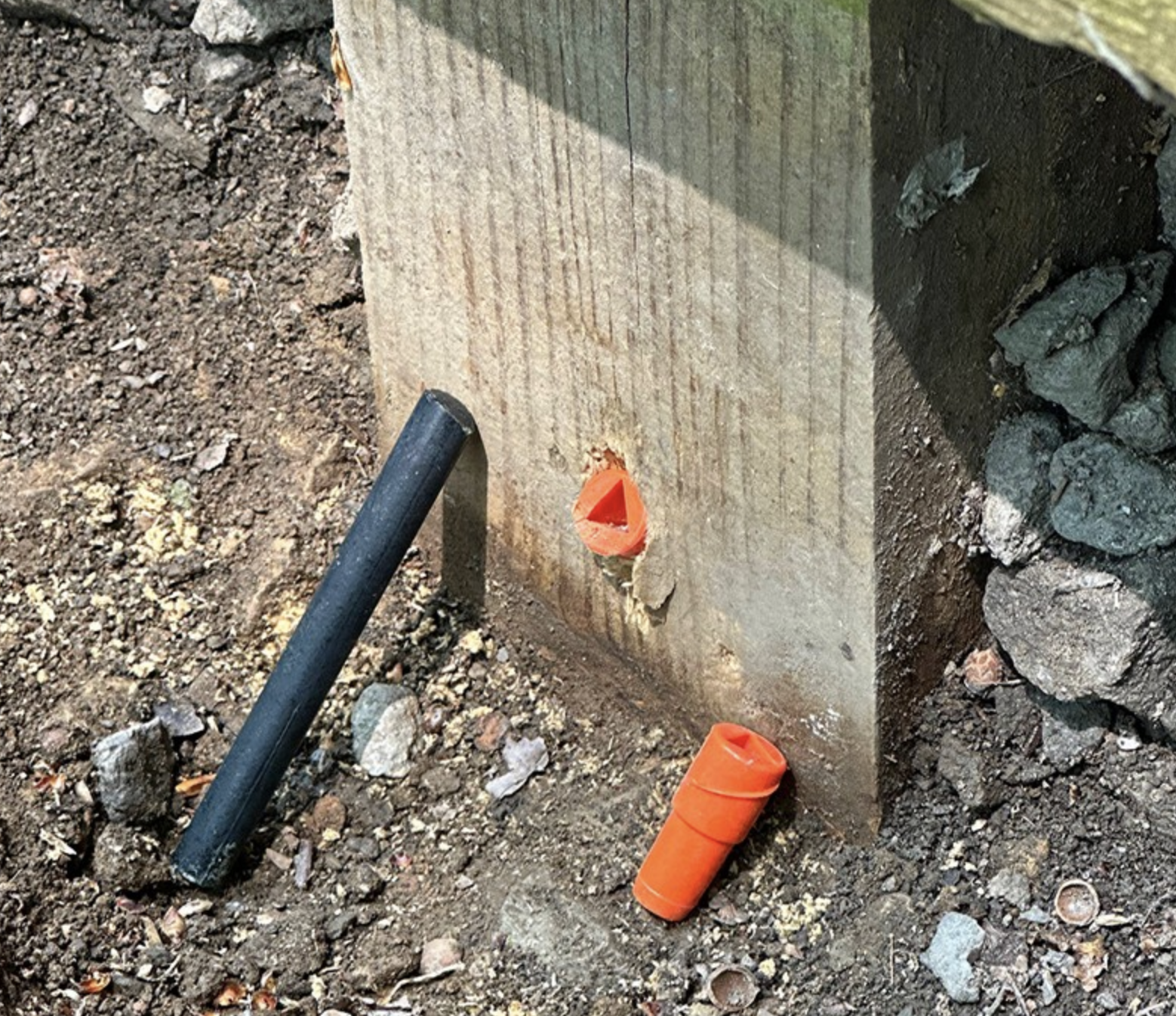
“Our Post ProServative product is a time-release preservative system that re-treats an in-service wooden post from the inside out,” McDonnell said. “It delivers a tough ‘barrier system’ which eliminates soil-to-wood and concrete-to-wood contact. Used in utility poles for over 25 years with great success, it is now available to the general public to help protect or re-treat post and pole infrastructure.”
McDonnell also has a product that literally covers the post. Post Protector is a sleeve that “separates the post from ground contact and the micro-organisms that dwell within. The micro-organisms can never get to the wood. It is made out of landfill-liner material with a 450-year shield application half-life.”
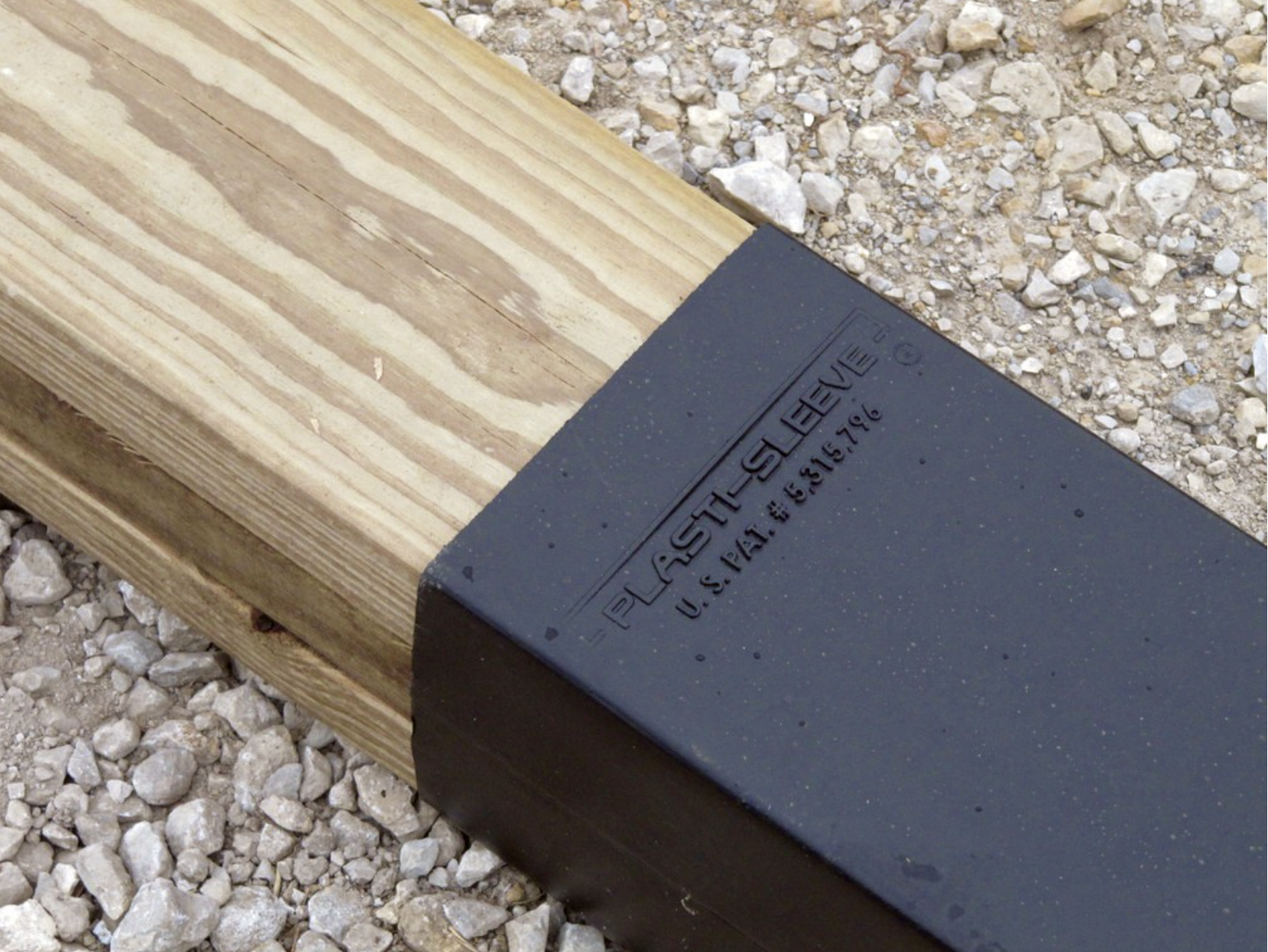
Gruhlke said his company’s Plasti-Sleeve product is the original post-protection sleeve, originating in 1994. “It’s an accessory with enhanced protection against rot. It’s a molded, high-density, one-piece, Polyethylene plastic cover sleeve that encapsulates the lower portion of the post and isolates it from organic ground contact and other things that are in contact with the wood. Our product enhances and provides a barrier to treated wood. It’s a slide-on application. You can use a nail or screw to attach it on the top. The plastic will last indefinitely.”
Planet Saver Industries’ Green Post product is another coverage option, in this case with a coating and a wrap that Hoffman said “provides a double-barrier protection keeping rot and decay elements from getting to the post as well as keeping treatments in the post where they belong. It wraps and protects in-ground wood applications from the elements.” He continued, “The double-layer wrap is a factory-applied heat seal to the lumber, delivered ready to install with an uplift-restraint system. Green Post’s solution is non-toxic, environmentally friendly, and termite tested.”
Wood Facts
Common Wood Choices
- Southern Yellow Pine: Readily available and cost-effective, making it an attractive option for many builders. It must be treated if it’s going to be used in the ground.
- Douglas Fir: Known for its strength and natural resistance to decay and insects. It should be treated even though it has natural resistance. More expensive and durable than pine but often not a necessary upgrade.
- Cedar: Naturally durable, beautiful, and resistant to decay. Not typically used because the posts are usually covered in post-frame so its beauty goes to waste. Some people would say they don’t need to be treated if they’re going in the ground, but that is not a popular opinion – posts going into the ground should be treated.
All posts that are going into the ground should be treated or covered, preferably both to guard against decay and insects.
Post Protection Suppliers
Perma-Column LLC
Ossian, Indiana
www.permacolumn.com
PermaSeal USA
Chesterfield, Missouri
www.permasealusa.com
Planet Saver Industries/GreenPost
East Earl, Pennsylvania
www.planetsaverind.com
Plasti-Sleeve
Zimmerman, Minnesota
www.plastisleeve.com
Post Protector Inc.
Pottsville, Pennsylvania
www.postprotector.com