How to pick the right door for durability, maintenance, security, comfort, and curb appeal
A barndominium’s big doors get most of the attention, but the entry door is likely the one you’ll use most. It’s part of your building envelope (the parts that keep outside air and temperatures where they belong), and it’s also one of the first things people notice when they arrive. In many barndo settings—open lots, rural sites, and windy exposures—your entry door isn’t just a style choice. It’s a performance choice that can affect long-term durability, comfort, and even resale value.
Start with the door system, not just the door slab
It’s tempting to shop simply by material (steel vs. fiberglass vs. wood), but a door’s real-world performance depends on the whole system, including the slab, frame, sill or threshold, weatherstripping, glass package (if any), and hardware. Five features show up again and again in “good doors” that last and feel solid: a rigid structural frame inside the slab, a high-quality exterior skin, a tight sealing system, a strong, weather-resistant frame and sill, and quality hardware with a secure locking system. Even within the same material category, quality can vary widely, so it’s smart to look beyond the label.
Door materials in real life: how they hold up in exposed barndo settings
Steel doors
Steel is a dependable workhorse for strength, security, and exposure. It performs well in high-wind environments and resists warping when properly reinforced and installed. Steel also handles direct sun exposure well compared to some materials. The tradeoffs are that steel can dent and show dings more readily than fiberglass, and if the finish gets damaged and isn’t touched up, steel can eventually rust—especially in corrosive environments.
Fiberglass doors
Fiberglass tends to be a favorite for low maintenance and long-term appearance. It won’t rust or rot, handles moisture well, and is less likely to show dents than steel. In exposed environments, fiberglass can perform very well when built with reinforced frames. Quality matters, though. Lower-end fiberglass doors have sometimes had issues with warping when exposed to large temperature differences between interior and exterior conditions.
Wood doors
Wood is chosen mainly for its character and premium appearance. A quality wood door can be strong and perform well structurally, but it requires more maintenance—especially in sunny or exposed locations. Without protection from a porch or overhang, wood can expand, contract, and require periodic refinishing to maintain its appearance and durability.
Aluminum doors
Aluminum is lightweight and corrosion resistant. It doesn’t rust like steel, though it can oxidize in corrosive environments. This is mainly an aesthetic issue since the oxidization halts further damage. The surface may show chalking, fading, or a pitted surface. Aluminum doors can support modern design styles, but lighter residential versions may not feel as rigid as steel or reinforced fiberglass. In hot environments, expansion and contraction also need to be considered.
“New” PVC-Framed Steel-Reinforced Doors
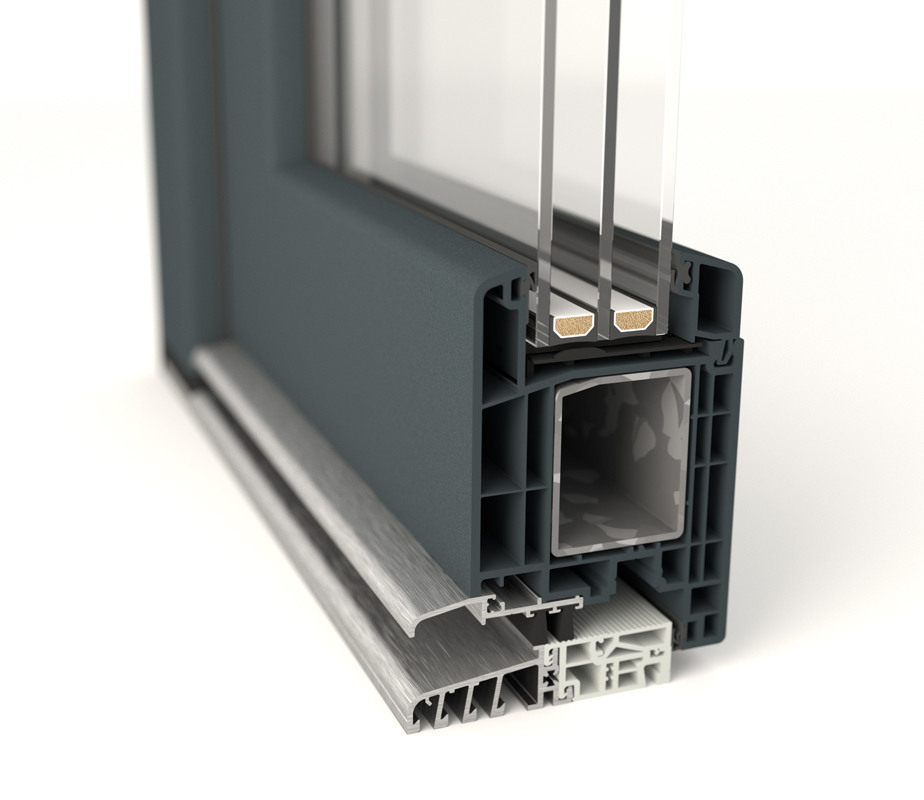
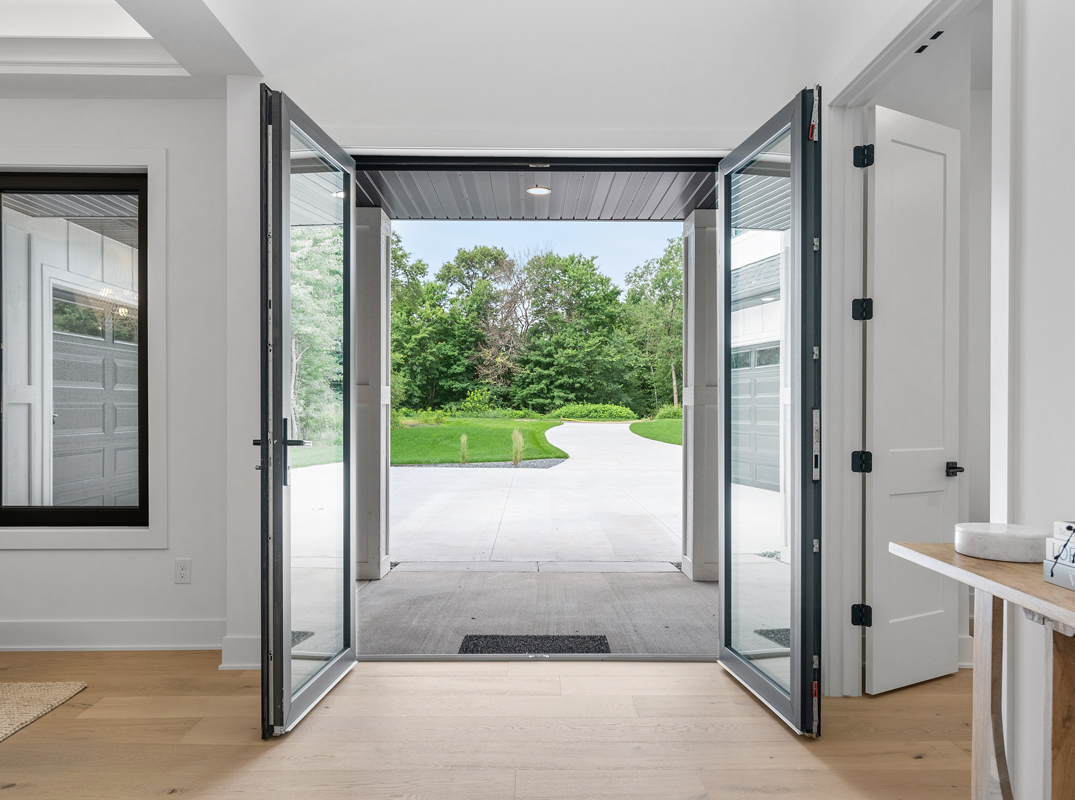
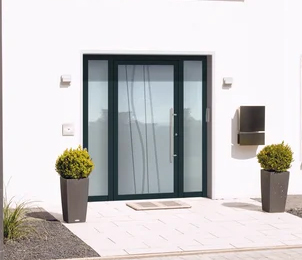
Another option that is becoming more common in North America uses rigid PVC frames reinforced internally with galvanized steel. This system originated in Europe, where highly airtight building envelopes and energy performance standards drove the development of multi-chamber PVC door and window frames. In these systems, the PVC frame provides corrosion resistance and weather durability, while steel reinforcement inside the frame adds structural rigidity and security.
Many PVC-framed doors use multi-chamber profiles that improve insulation and help control thermal transfer through the frame. Combined with compression seals and multi-point locking hardware, they can achieve very tight weather seals and strong resistance to air infiltration. Because the PVC material itself does not rust, rot, or require painting, maintenance requirements are typically low.
These systems are often sold as complete engineered door units, however, rather than simple slab replacements, which makes them somewhat more specialized to source and install. However, as they become more common in the United States, they become easier to obtain. For barndominium owners interested in strong weather sealing, durability, and modern performance standards, reinforced PVC systems are an option worth considering.
Strength, insulation, and low maintenance: what each material does best
If strength and security are the priority, steel is often the straightforward choice for a barndominium. Aluminum can also provide strength in well-engineered systems.
If structural stability and corrosion-resistance are the priorities, consider PVC (uPVC) door systems. PVC does not rust, rot, or absorb moisture, so it’s well suited to damp environments. Exterior PVC door systems with internal galvanized steel frame reinforcements are well-equipped for wind pressure resistance and alignment maintenance.
If insulation and comfort are the priority, the internal construction of the door matters more than the outer material. Fiberglass and steel doors both commonly pair with insulated cores that provide strong energy performance.
If low maintenance is the priority, fiberglass often leads because it resists dents, rust, and moisture damage. Aluminum and powder-coated steel doors can also require very little upkeep.
Wood doors lend aesthetic beauty and warmth to the structure, but generally require the most ongoing maintenance, such as staining or painting to prevent moisture and/or sun damage.
Door cores: why what’s inside matters as much as what’s outside
Most exterior doors use insulated foam cores, and the core material affects both durability and energy performance. Polyurethane foam cores typically offer higher insulation values and greater structural rigidity because the foam bonds to the door skins. Polystyrene foam cores provide insulation at a lower cost but usually do not deliver the same strength or insulation performance as polyurethane.
Solid wood cores are strong but usually provide less insulation than modern foam-filled doors.
For barndominiums—which often have large open interiors—choosing a well-insulated door core can make a noticeable difference in comfort and energy costs.
Composite and multi-material doors
Many modern doors combine multiple materials to improve performance. A door may include a fiberglass or steel exterior, insulated foam core, reinforced internal framing, and composite jambs designed to resist moisture. These engineered systems help reduce warping, improve insulation, and extend durability.
Energy performance: the numbers that matter
When comparing exterior doors, you’ll commonly see ratings such as R-value, U-factor, and SHGC.
R-value measures resistance to heat flow, generally the insulated portion. Higher numbers indicate better insulation.
U-factor measures how quickly heat moves through the whole door system. Lower numbers indicate better energy efficiency.
SHGC (Solar Heat Gain Coefficient) measures how much solar heat passes through the door, particularly through glass inserts.
For many climates, a U-factor of about 0.30 or lower represents strong performance for an exterior door.
For homeowners comparing doors, ENERGY STAR–rated products provide a simple way to confirm that the door meets tested efficiency standards for your climate zone. Keep in mind, however, that a door without an Energy-Star rating may be just as efficient or more efficient than the Energy Star rated door as it may not have been rated.
Air leakage: often more important than insulation numbers
Even a highly insulated door can perform poorly if air leaks around the edges. In open rural settings where many barndominiums are located, wind pressure can push air through small gaps. Proper weatherstripping, thresholds, and installation quality play a major role in preventing drafts.
Frames, thresholds, and weatherstripping
The door panel is only part of the system. Frames should resist moisture and maintain structural stability. Thresholds should seal tightly at the bottom and allow adjustment if the building settles. Weatherstripping should compress evenly to create a continuous seal without making the door difficult to operate.
Proper installation is critical. A door installed out of square can create gaps that allow air infiltration.
Glass and daylighting
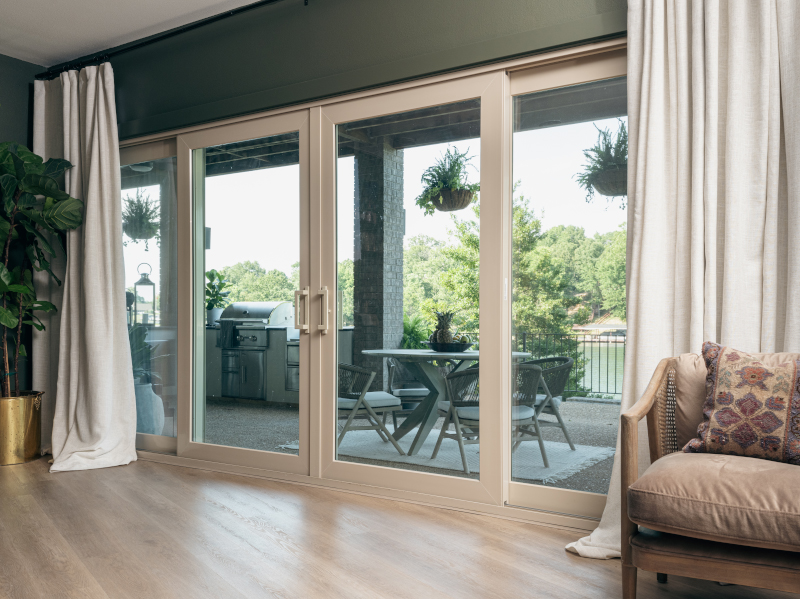
Glass inserts can add natural light and visual interest to entry doors. Double-pane insulated glass is common and helps reduce heat transfer. Additional upgrades may include Low-E coatings, argon gas fills, and warm-edge spacers. Triple-pane glass can provide additional insulation in colder climates.
Tempered or impact-rated glass improves safety and durability while reducing the risk of breakage.
Security considerations
Security depends on the entire door system, not just the lock. Strong door construction and reinforced frames provide better resistance to forced entry as do heavy-duty strike plates with long screws anchored into framing. Three hinges are typically recommended, with security hinges or non-removable pins where needed. Multi-point locking systems provide additional security by engaging the frame in several locations.
Maintenance and lifespan
Routine maintenance helps extend the life of exterior doors. Homeowners should periodically check weatherstripping, inspect caulking around the frame, tighten hardware, lubricate hinges and locks, and clean the door surface.
Steel, fiberglass, and aluminum doors usually require minimal maintenance. Wood doors typically require periodic sealing, staining, or painting.
A well-built exterior door that is properly installed can last 20 to 30 years or more, depending on material, exposure, and maintenance.
Aesthetics and curb appeal
Your entry door is one of the first design elements people notice. Color, panel design, glass inserts, and hardware all influence the overall appearance.
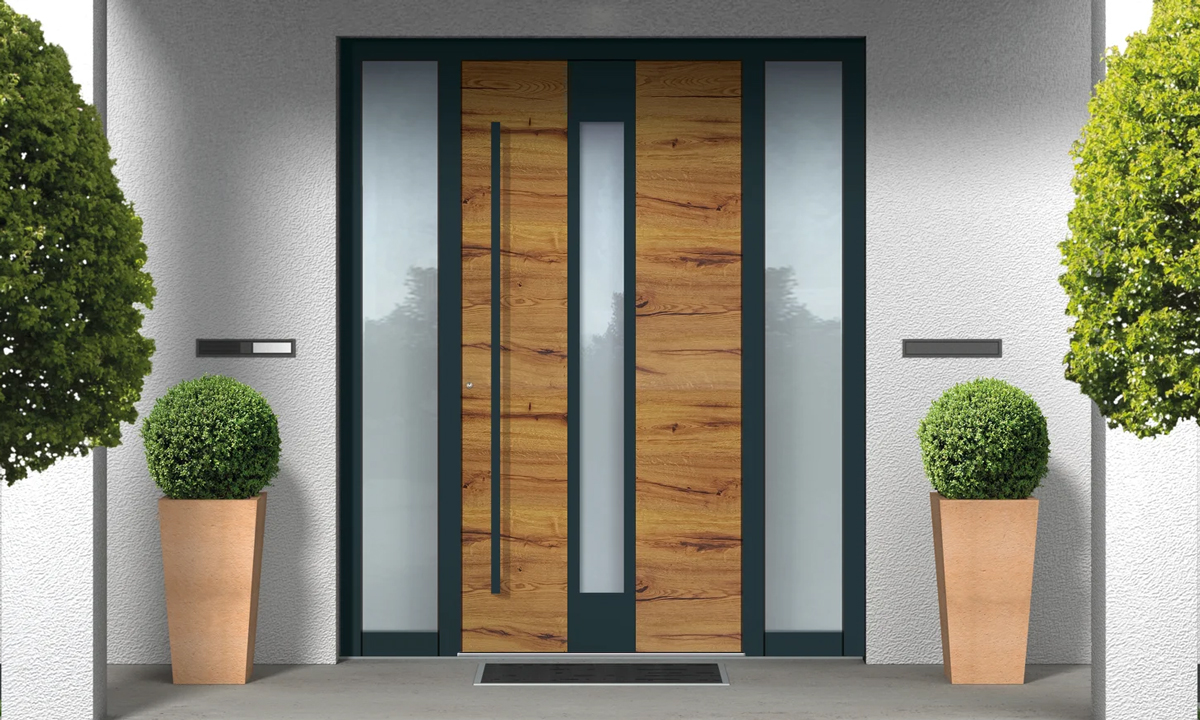
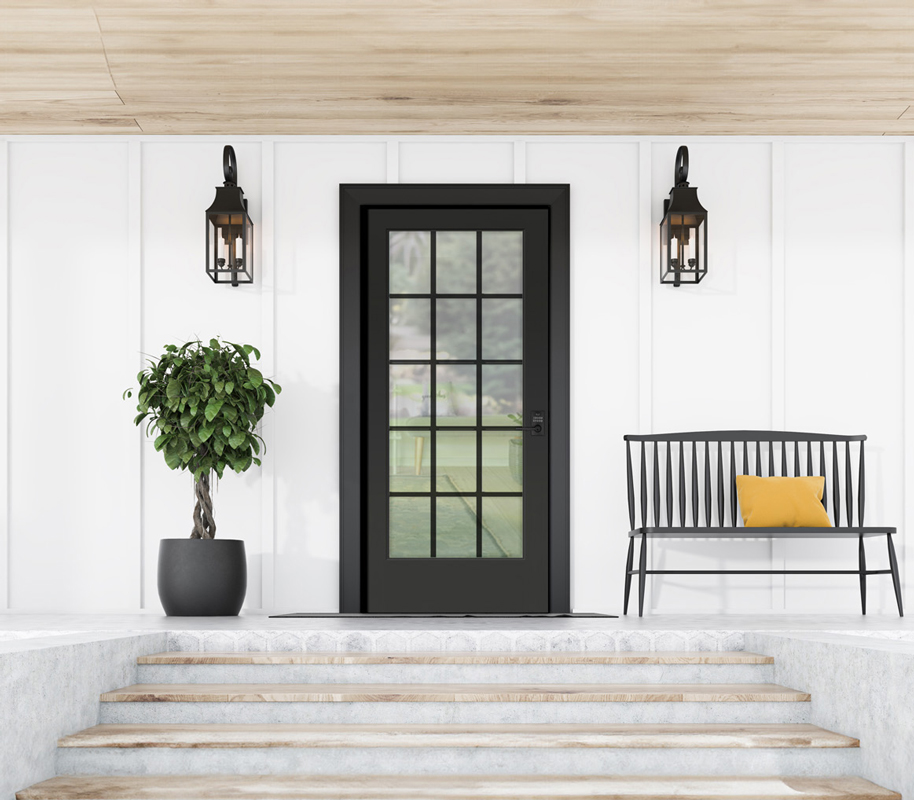
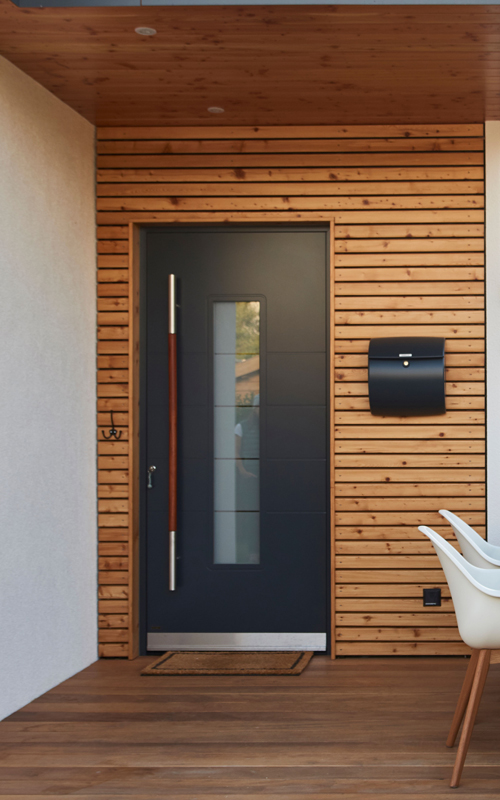
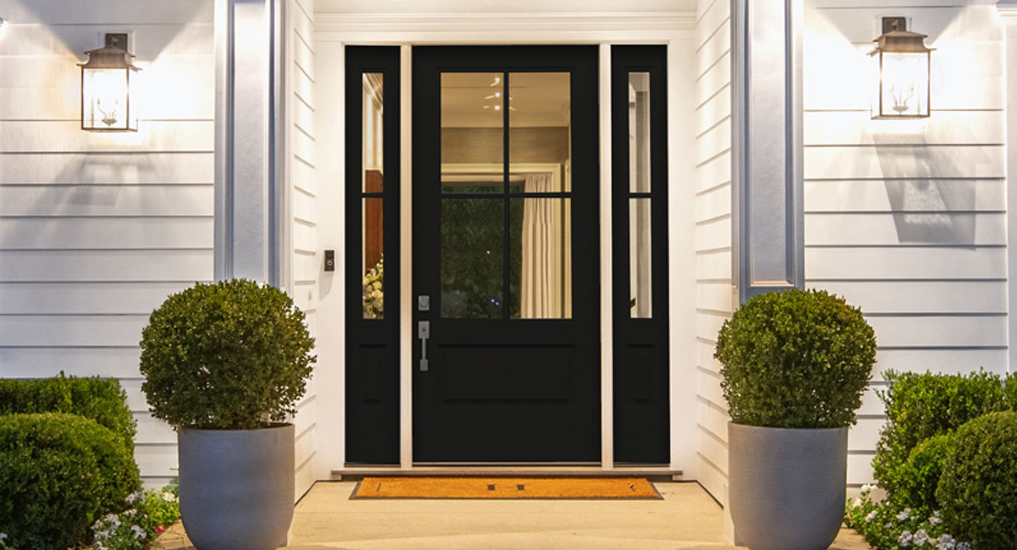
Modern barndominiums often favor simple panel designs and darker colors such as black, charcoal, or bronze. Wood-grain finishes can add warmth and soften the industrial feel of metal siding.
Hardware choices such as matte black, brushed nickel, or oil-rubbed bronze can complement exterior lighting and trim.
How the entry door affects perceived home quality
The front door often serves as the visual introduction to a home. A door that feels solid, looks well finished, and fits the architecture of the building signals quality and attention to detail.In fact, front door upgrades are often cited among the highest return-on-investment exterior improvements because they significantly influence first impressions.
Resources
Nathan Shetler • Northern Building Components • 269-521-4554
Josh Eicher • KleerTek Industries, LLC • www.kleertek.com
George Terrell, PMP, CSM – Product Manager • Cornerstone Building Brands • www.cornerstonebuildingbrands.com
Roman Troyer, Sales Manager • Sommer USA Inc. • www.shop.sommer-usa.com