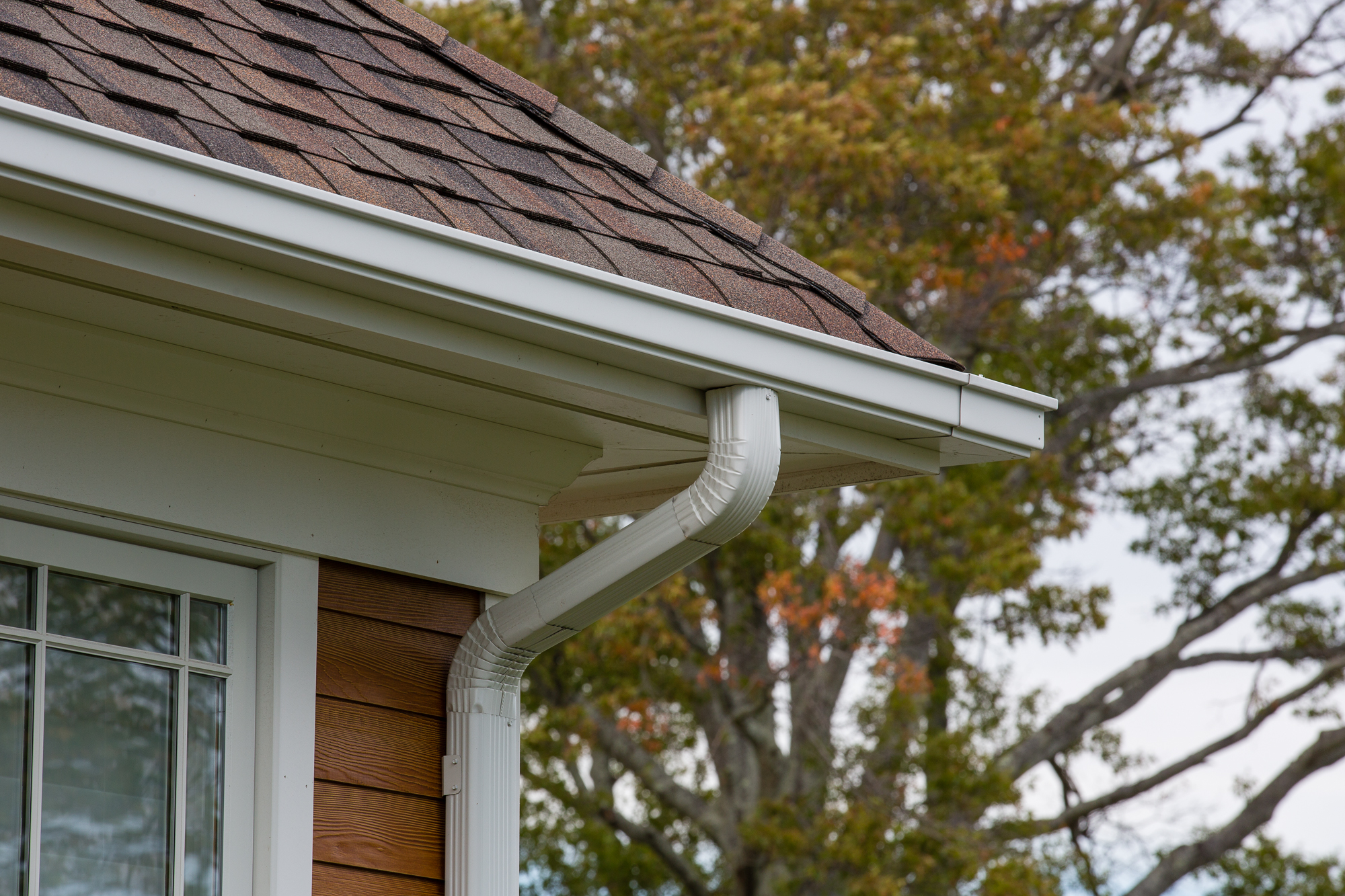
How to Choose the Right Gutter Style, Material, and Size
So you’ve decided you’re going to build a barndo, and there are a lot of decisions to be made… many are big decisions like the floor plan, exterior finishes, roof style, windows, and interior design. Gutters often end up being treated like an afterthought. But when it comes to protecting a barndominium long-term, gutters can play a much bigger role than you may realize.
Not every building absolutely requires gutters in every situation. Some barndos built on well-drained sites with sloped grading and little landscaping near the building perimeter that could suffer from erosion or backsplash may function adequately without them. However, many barndominiums benefit greatly from a properly designed gutter system, especially because metal roofs and large roof spans can move an enormous amount of water during heavy rain.
A barndominium roof may shed thousands of gallons of water during a single storm. Without a system to control where that water goes, runoff can create problems around the building over time.
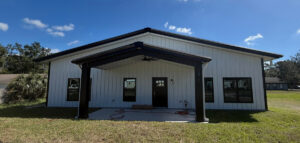
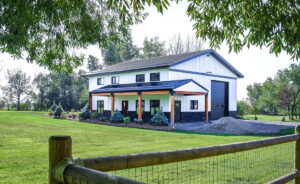
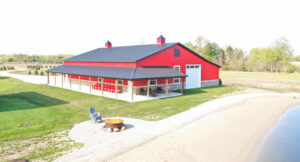
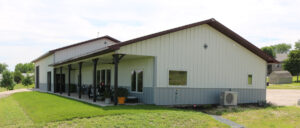
Barndos Create Unique Challenges
Protecting the Foundation
One of the biggest reasons homeowners install gutters is to help protect the foundation. When rainwater pours directly off the roof edge, it often lands right beside the structure. Over time, repeated saturation near the slab or foundation walls can contribute to settling issues, soil movement, moisture intrusion, and drainage problems.
This can be especially important for barndominiums because many are built on slabs and often feature large roof surfaces that concentrate water in specific areas. Even a moderate rainfall can dump a surprising amount of water along the perimeter of the building.
Gutters and downspouts help move water farther away from the structure, so it has less chance to collect near the foundation. In many cases, extending downspouts away from the building can be just as important as the gutters themselves.
Controlling Erosion Around the Building
Barndominiums are frequently built on rural properties where landscaping may still be developing or where natural drainage patterns are less controlled than in suburban neighborhoods. Without gutters, roof runoff can gradually erode soil around the home, especially beneath roof valleys or long eave lines.
Over time, this erosion can create trenches, muddy areas, exposed aggregate near slabs, or uneven ground around walkways and entrances. Gravel washout can also become a recurring frustration around driveways, shop entrances, and porch areas.
Metal roofs can intensify the issue because they shed water very efficiently. Instead of absorbing moisture slowly like some roofing materials, metal roofing quickly channels water off the roof surface during storms. On large barndominiums with expansive roof planes, that concentrated runoff can hit the ground with considerable force.
A properly sized gutter system helps control and redirect that water before it causes damage.
Reducing Splash on Siding — Especially Steel Siding
Another common issue is water splash-back against the exterior walls. When rainwater falls directly from the roof edge onto the ground below, it can bounce dirt, mulch, and debris back onto the siding.
This is particularly noticeable on lighter-colored walls and can become more visible over time on steel siding. Repeated splash-back may leave dirt streaks, discoloration, or muddy residue near the bottom portions of the wall. In areas with heavy rainfall, homeowners may find themselves cleaning siding more often simply because roof runoff is not controlled.
Gutters help minimize this by collecting water before it reaches the ground. Combined with proper grading and splash control at downspouts, they can help keep exterior walls cleaner and reduce wear around the base of the structure.
Helping Prevent Ice Problems Around Entrances and Walkways
In colder climates, gutters can also help reduce winter ice problems around a barndominium. Without gutters, melting snow and winter runoff often drip directly from the roof edge onto sidewalks, porches, patios, and driveways. When temperatures drop again, that water can refreeze into dangerous ice patches.
Because metal roofing sheds snow and meltwater melt quickly during freeze-thaw cycles, water may repeatedly run off the roof during the day and refreeze overnight near entry doors and walking paths. Large roof overhangs and long eave lines can make the issue worse by concentrating water in those predictable areas such as icy spots near garage entrances, porch steps, or shop doors, quickly becoming both a safety concern and a maintenance headache.
A properly designed gutter system helps capture and redirect melting snow and runoff before it reaches those high-traffic areas. In snow regions, homeowners may also consider larger gutters, properly placed downspouts, and snow-retention systems on metal roofs to help manage winter
Common Gutter Styles
Today’s homeowners have several gutter styles to choose from, and appearance can play a surprisingly large role in the overall look of a barndominium.
K-Style Gutters
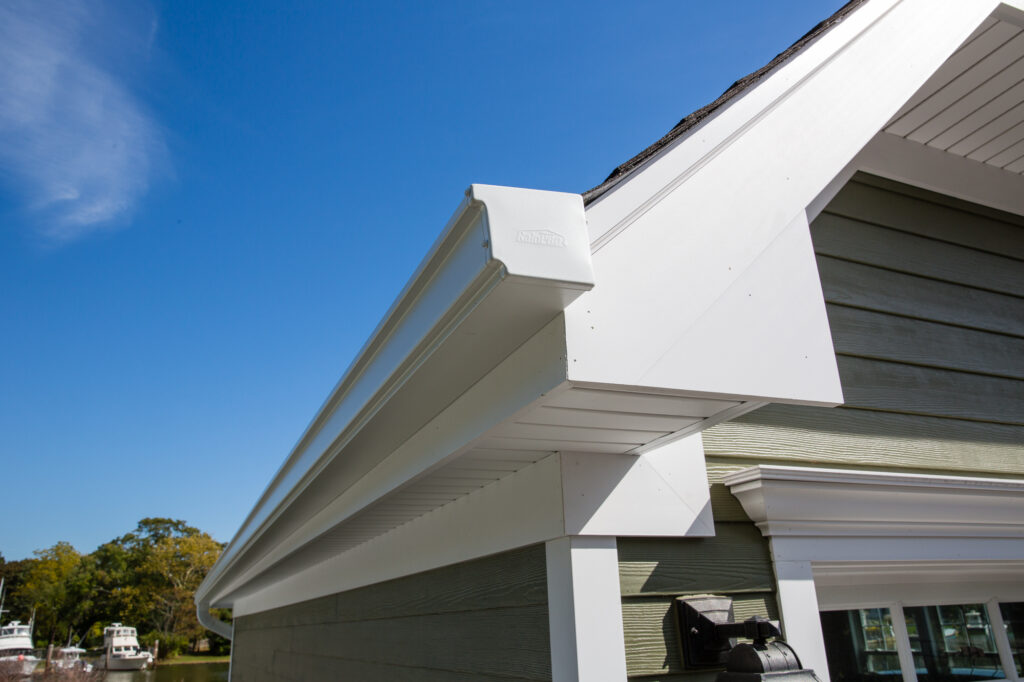
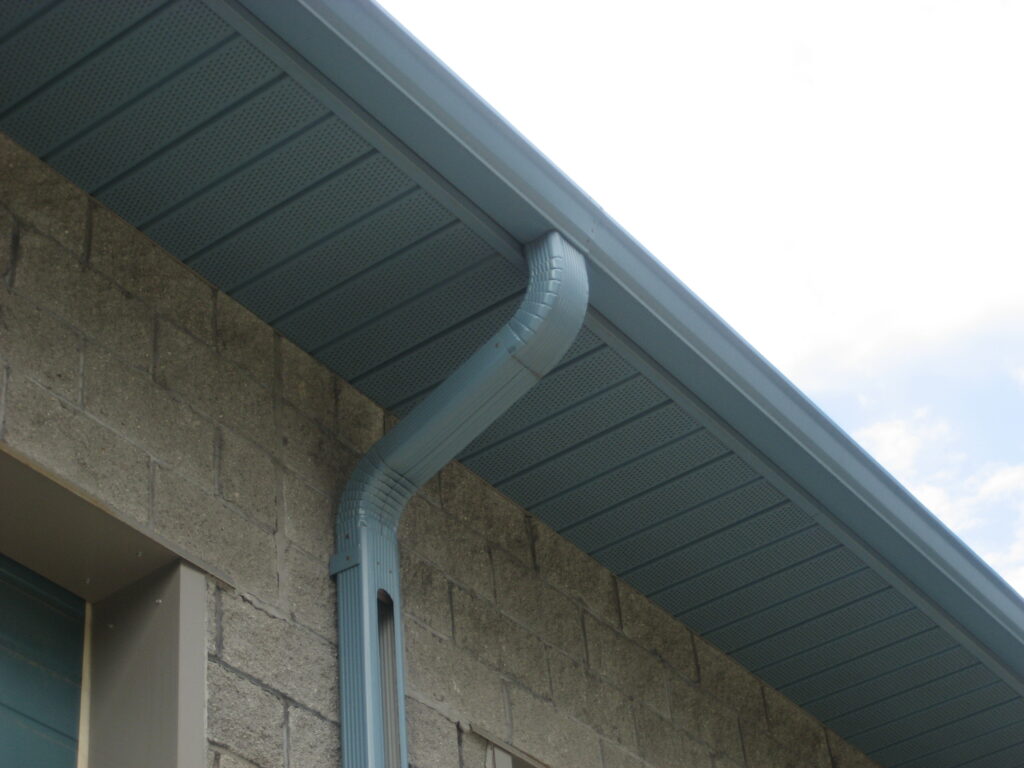
K-style gutters are the most common residential option. Their flat-back design mounts easily to fascia boards, while the front profile resembles decorative crown molding. They generally handle water efficiently and blend well with both traditional and modern barndominium styles.
Half-Round Gutters
Half-round gutters feature a rounded shape often associated with historic or upscale architecture. Many homeowners choose them for rustic, farmhouse, or high-end custom barndominiums because they create a softer architectural appearance.
However, half-round systems may carry less water than similarly sized K-style gutters, making sizing especially important on large roofs.
Box Gutters
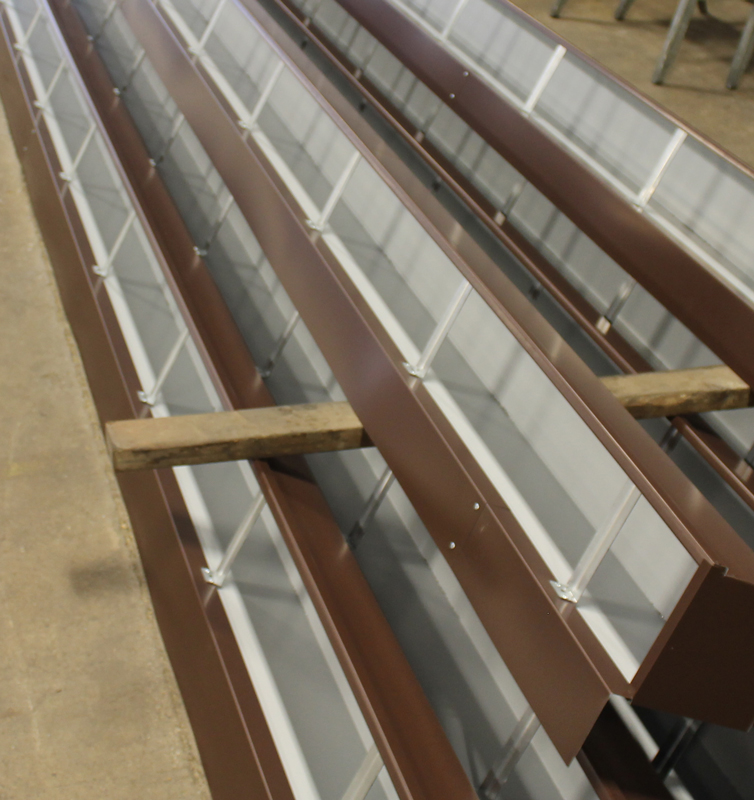
Box gutters are larger, deeper systems commonly used on commercial or industrial buildings. Some oversized barndominiums or shop houses may benefit from them because they can handle very high water volumes.
They are typically more functional in appearance and are often selected when drainage performance is the primary concern.
Hidden Hangers vs. Spikes
Most modern gutter systems use hidden hangers rather than exposed spikes. Hidden hangers generally provide a cleaner appearance and stronger attachment, particularly in snow regions where gutters may experience heavy loads from ice and sliding snow.
Older spike-and-ferrule systems are still found on some buildings but are less common in newer residential installations.
Best Gutter Materials
Gutter material affects durability, maintenance requirements, appearance, and long-term performance.
Aluminum
Aluminum remains one of the most popular gutter materials because it is lightweight, rust-resistant, and available in many colors. It performs well in most climates and is commonly used on both homes and barndominiums.
The downside is that thinner aluminum gutters can dent from ladders, hail, or falling branches.
Steel
Steel gutters are stronger and more impact-resistant than aluminum, making them attractive in regions with heavy snow or severe weather. Steel also expands and contracts less than aluminum in colder climates making seams less likely to pop. They are less likely to dent but may eventually rust if protective coatings become damaged, though if galvalume is used, rusting is less likely.
Many homeowners choose steel when durability matters more than minimizing maintenance, and if your barndominium has steel roofing and wall panels, the preferred option would be to use the same material for gutters.
Copper
Copper gutters are typically considered a premium option. They develop a natural patina over time and can create a distinctive appearance on luxury or custom barndominiums.
Copper is extremely durable but also significantly more expensive than most alternatives.
Vinyl
Vinyl gutters are inexpensive and resistant to rust and corrosion. However, they may become brittle in cold climates or warp in areas with extreme heat and sun exposure.
For that reason, vinyl is often more common on budget-conscious projects or in milder climates.
Sizing Matters More Than Most Homeowners Realize
One of the most common mistakes homeowners make is underestimating how much water a large barndominium roof can produce.
Many conventional homes use standard 5-inch gutters, but barndominiums with expansive roof areas often benefit from larger 6-inch systems. Larger gutters can move more water and are less likely to overflow during heavy rain.
Downspout sizing and placement matter as well. Even a large gutter system can struggle if there are too few downspouts or if they are undersized.
Homes in regions with heavy rainfall, snow accumulation, or steep roof pitches may require larger drainage systems to handle peak water flow. Metal roofs can also overwhelm undersized gutters because water sheds so rapidly from the roof surface.
For oversized roofs or complex rooflines, homeowners may benefit from consulting a contractor experienced in drainage calculations rather than simply choosing the most common gutter size.
Are Gutters Worth It?
For most barndominium owners, the answer is yes. Gutters are not just decorative trim attached to the roof edge; they are part of the building’s overall water-management system.
The larger the roof, the more important drainage usually becomes. Factors such as roof pitch, local rainfall, snow load, soil conditions, landscaping, and siding materials all influence whether gutters make sense for a particular property.
For homeowners investing in a barndominium designed to last for decades, gutters can provide relatively inexpensive protection against water-related problems that may become much more costly later.
Resources
ABC Supply Co.
https://www.abcsupply.com/
Advanced Architectural Sheet Metal & Supply
www.advarchsm.com
American Society of Home Inspectors (ASHI)
https://www.homeinspector.org/
Fine Homebuilding
www.finehomebuilding.com/
Gutter Supply
www.guttersupply.com/
Metal Construction Association (MCA)
https://metalconstruction.org/
National Association of Home Builders (NAHB)
www.nahb.org/
This Old House
www.thisoldhouse.com/
U.S. Department of Housing and Urban Development (HUD)
www.hud.gov/