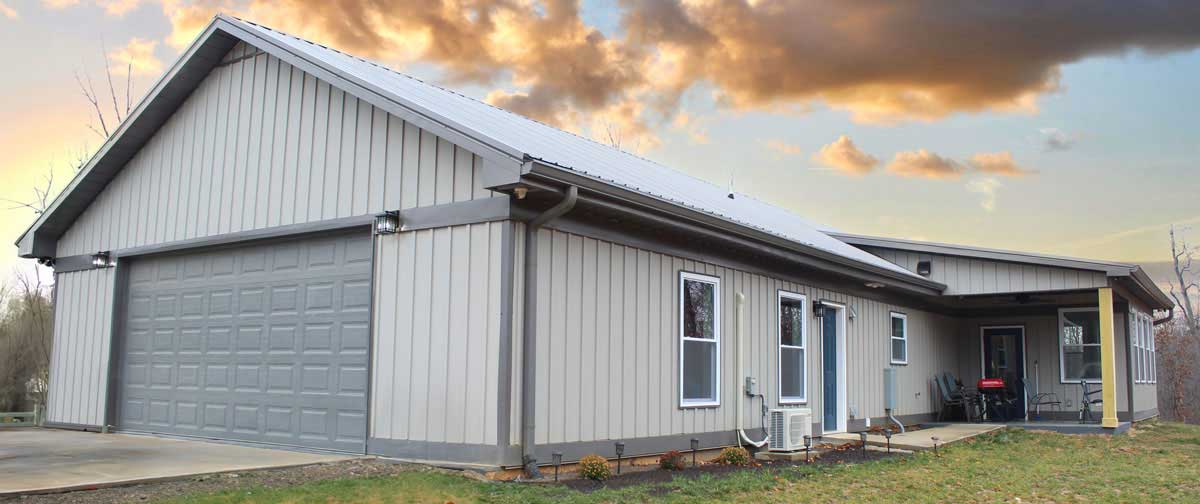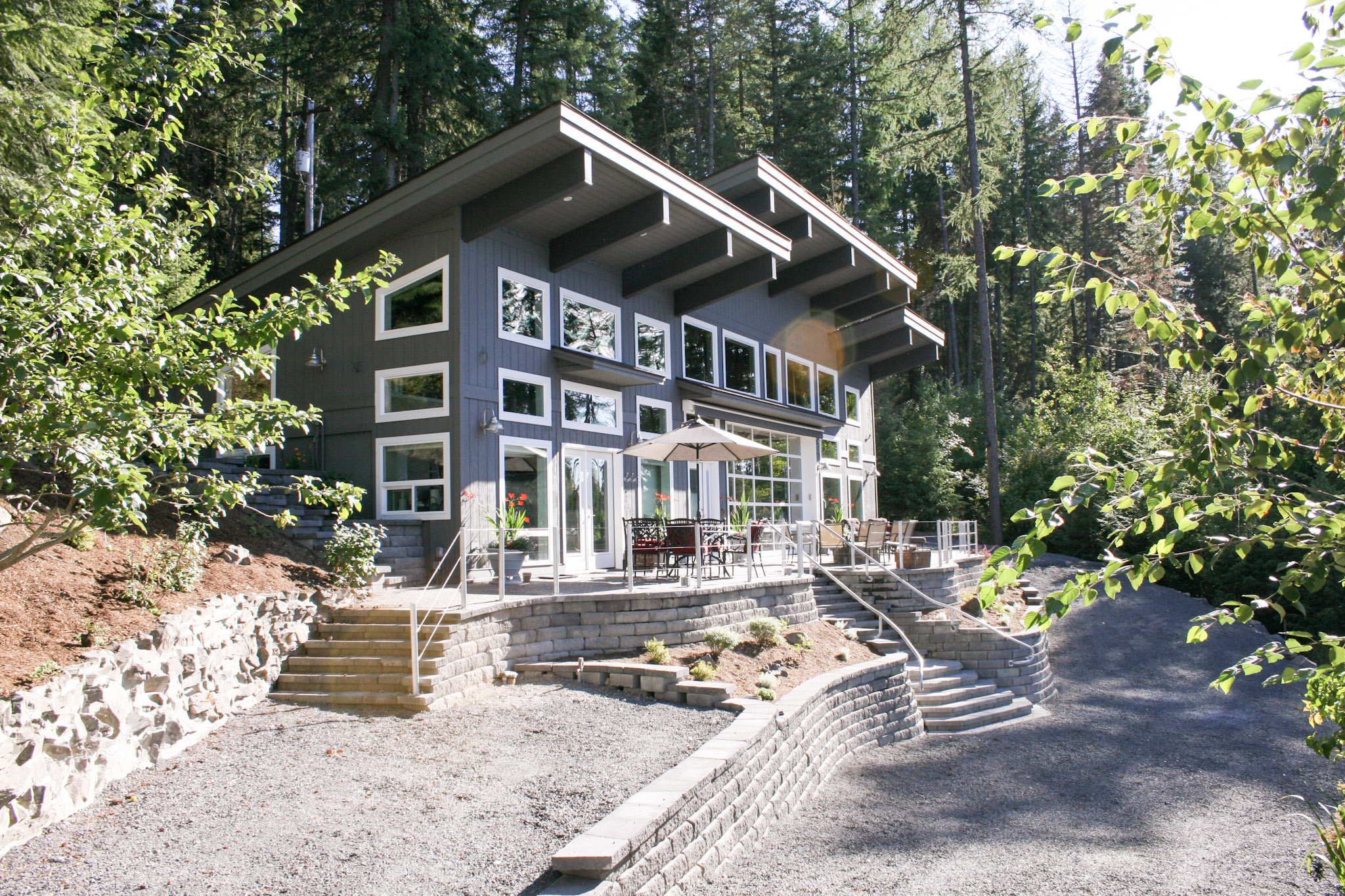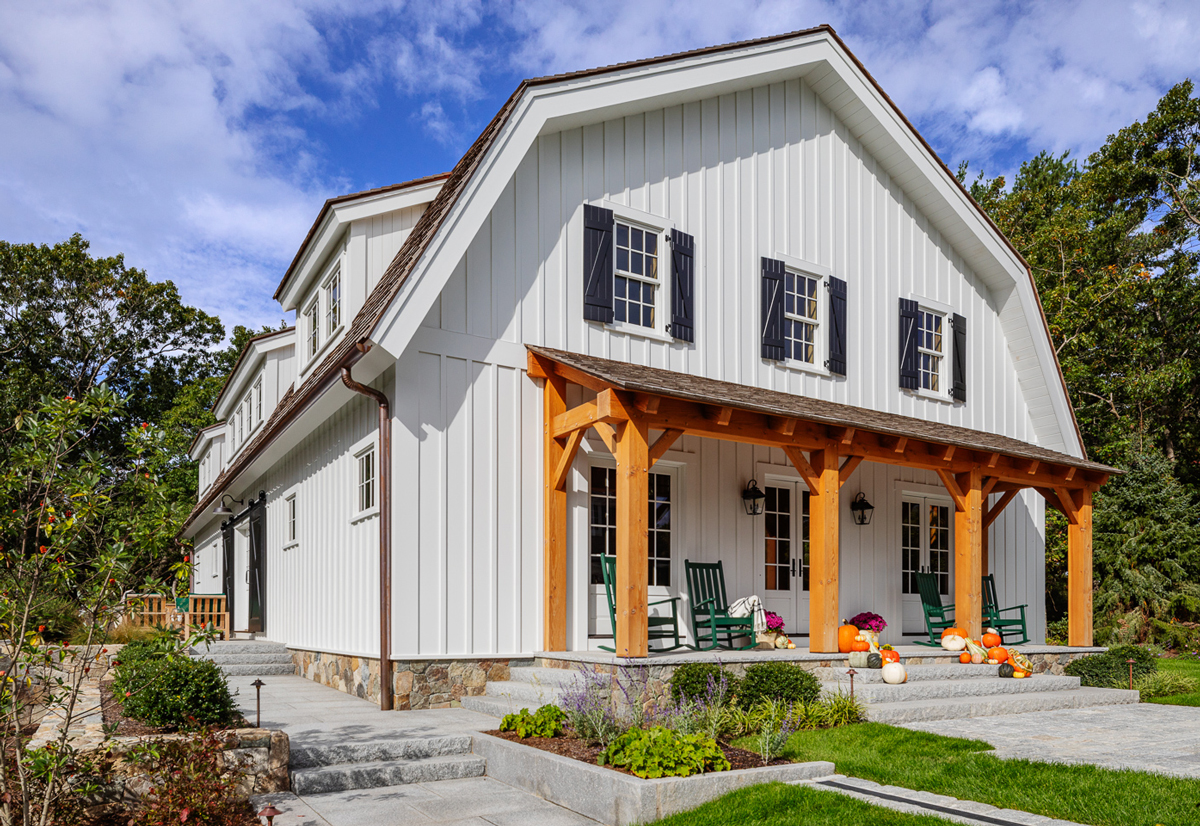
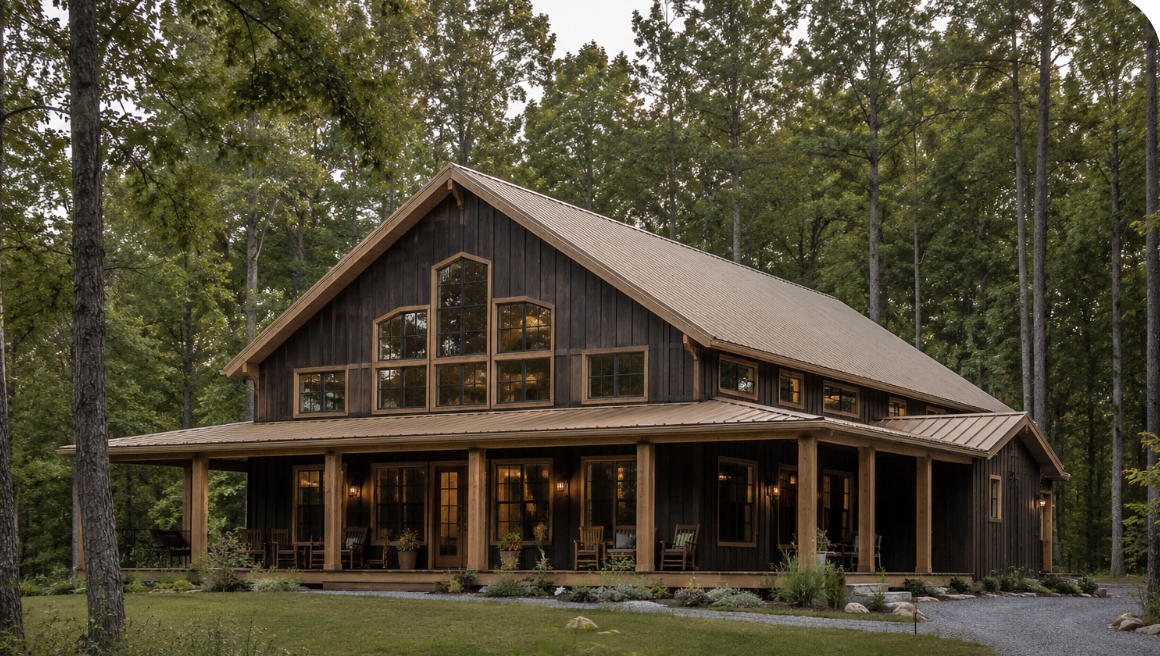
1. How much does it cost to build a barndominium?
This question is far and away the most common question that would-be barndo owners ask, but of course there is no simple answer. Barndominium costs vary widely depending on many things starting with size, location, labor rates, finishes, and whether the owner acts as their own general contractor.
2. Are barndominiums cheaper to build than traditional houses?
Barndos can be cheaper than conventional builds, but they are not always cheaper. Savings often come from simpler structural designs, faster construction timelines, and combining multiple uses into one building. However, if homeowners add premium finishes, complex floor plans, large porches, high-end kitchens, or custom exterior features, costs can rise quickly.
A simple shell can cost far less than a fully finished custom home with high-end kitchens, vaulted ceilings, and luxury features, naturally, so many people choose to have the foundation and shell built, then finish it themselves. Barndominiums can provide larger open spaces, integrated shops or garages, and flexible layouts for a similar budget compared to some conventional custom homes. However, in some regions, strict codes or a lack of experienced barndominium contractors can take a toll on the cost of a barndo. Further, site preparation, utilities, concrete work, insulation choices, and interior finishes often have a bigger impact on the final price than people expect.
In some areas, labor shortages, engineering requirements, and rising material prices narrow the price gap between barndominiums and conventional homes. Many buyers choose barndominiums less because they are “cheap” and more because they offer flexibility, durability, and open interior space.
3. Can you get financing for a barndominium?
Yes, but financing can sometimes be more challenging than for a traditional house. Some lenders are unfamiliar with barndominiums or cautious about appraisal values in areas where there are few comparable sales. Buyers often have better success working with local banks, rural lenders, or institutions experienced with post-frame and metal building projects. Having detailed plans, contractor bids, engineering documents, and a realistic budget can improve approval chances. Finished homes that clearly meet residential codes are usually easier to finance than partially completed or DIY-heavy projects.
4. What are the pros and cons of living in a barndominium?
Owners often love the open layouts, high ceilings, large garages or shops, and the ability to customize the structure around their lifestyle. Barndominiums can work especially well for rural living, hobby spaces, home businesses, or storing equipment and recreational vehicles. Due to large open spaces for continuous insulation, they can be very energy efficient. Also, since the norm is to finish the roof and exterior walls with metal panels, barndos can be very low-maintenance.
On the downside, poor insulation or ventilation planning can lead to condensation, temperature swings, or noise issues. Some homeowners have discovered that large open spaces can cost more to heat and cool if the building envelope is not designed properly. However, most of these issues can be avoided if the owner does their homework when hiring their contractor and educates themselves before cutting corners on things like insulation.
Resale value and an aesthetic that fits into the neighborhood can also vary by region.
5. How long do barndominiums last?
A well-built barndominium can last for a very long time. Longevity depends heavily on construction quality, moisture control, roofing systems, foundation work, and ongoing maintenance.
Metal roofing and steel siding are popular because they resist rot, insects, and many weather-related issues. However, even durable materials still require maintenance, especially around fasteners, sealants, gutters, and areas exposed to standing water or harsh environments. Proper insulation and ventilation also help protect the building over the long term by reducing condensation and moisture buildup.
If quality components were used, the building was well designed and constructed with proper moisture control, and everything is well-maintained, the barndo can last as long or longer than a conventional house.
6. Are barndominiums energy efficient?
They can be very energy efficient when properly designed. Insulation strategy plays a major role, especially in metal-sided or metal-roofed structures where temperature transfer and condensation can become an issue. Spray foam insulation is popular because it helps seal air leaks, though fiberglass systems are also common when combined with good vapor and air control details. Window placement, HVAC sizing, ventilation, and shading all affect real-world efficiency. A tightly sealed building with quality insulation and well-designed mechanical systems can perform extremely well in both hot and cold climates.
7. What kind of foundation does a barndominium need?
Most barndominiums are built on concrete slab foundations, though foundation styles vary depending on climate, soil conditions, engineering requirements, and how the building will be used. Some regions require deeper frost protection, while others may use monolithic slabs or pier systems. The foundation must account not only for the home itself, but also for heavy shop equipment, vehicle storage, or large open spans if those are part of the design. Proper site drainage is also critical because water issues can create long-term problems regardless of the structure above.
8. Can you customize a barndominium floor plan?
Absolutely! Customization is one of the biggest attractions of a barndominium. Large clear spans allow for open living areas, oversized garages, workshops, lofts, home offices, and flexible multi-use spaces. Owners can design layouts around hobbies, home businesses, entertaining, or multigenerational living. Then, if a few years later they should decide that they need fewer bedrooms or they want to turn a piece of the open space into a media room with closable doors, they don’t have to worry about removing or adding interior walls since there are no load-bearing interior walls.
Experienced designers often caution homeowners not to focus only on wide-open space. Storage, traffic flow, natural lighting, and sound control should be considered. Even future lifestyle needs can be contemplated when creating a functional floor plan.
9. Do barndominiums hold their value?
In many areas, barndominiums have become more accepted in the housing market, especially in rural and semi-rural regions where buyers value land, shop space, and flexible living arrangements. Resale value often depends on construction quality, curb appeal, location, and whether the building feels like a finished home rather than a converted shop.
Exterior design choices, landscaping, garage integration, and residential-style features can all influence buyer perception. Situations where resale may be weaker include extremely industrial appearances, unfinished interiors, unusual financing situations, remote locations or overly large shop to living space ratios. As barndominiums have become more mainstream in various regions, financing and resale challenges have diminished, and it is likely that this pattern will be replicated in other areas.
10. What permits, inspections, and zoning requirements are needed?
Requirements vary significantly by state, county, and municipality. Some rural areas are very accommodating, while others have strict zoning rules, engineering standards, energy codes, or architectural restrictions. Homeowners may need separate permits for the structure, electrical work, plumbing, septic systems, driveways, and occupancy approval. In some areas, agricultural zoning does not automatically allow residential use. Because regulations vary so widely, many builders recommend contacting local planning and building departments early in the process before purchasing a home site, house plans, and materials.